
5 November 2026
Roofers In Addiscombe, Shirley And Park Hill: Roofs, Rules And Prices Street By Street
Roofers in Addiscombe, Shirley and Park Hill on East India Estate slate, Wates-era Park Hill roofs and Shirley's 1930s semis, with Croydon planning rules and 2026 prices.
Walk out of East Croydon station towards Lloyd Park and on to Shirley Hills, and in about three miles you go under most of the roof types this borough has. Natural slate on villas built after 1861 on the site of a military college. Flat roofs on a 1960s estate whose builder thought the Victorian houses it replaced were obsolete. Arts and Crafts gables with half-timbering. Then street after street of 1930s semis, rising towards the pine woods on the hill. Anyone searching for roofers in Addiscombe, Shirley and Park Hill is really asking about four or five different kinds of building. The planning rules also change every few hundred yards: one street needs permission for any roof alteration, the next is a conservation area without that rule, and further on there are no restrictions at all. This guide follows that route from west to east, one stop at a time, and ends with rough 2026 prices.
Watch: the roofs of Addiscombe, Shirley and Park Hill street by street, with the planning rules and prices that go with each.
Roofers in Addiscombe, Shirley and Park Hill: why the route matters
These three districts get lumped together as “east Croydon”, but they were built by different people for different buyers over the best part of a century. A roofer who treats a Shirley semi like an Addiscombe villa will order the wrong materials, misjudge the access and possibly start work that needs permission without applying for it. So when someone rings us, our first question is the road name, before what the leak looks like.
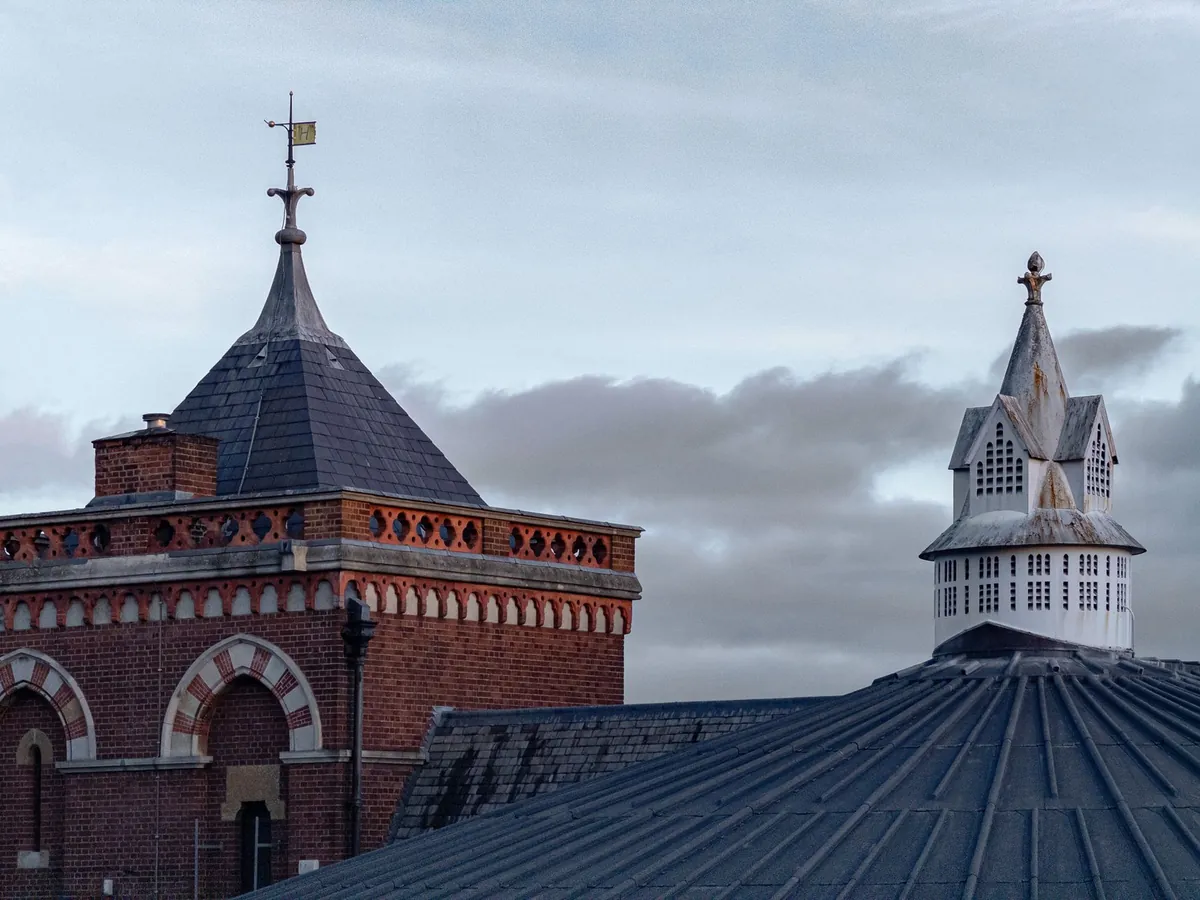
There’s a practical reason too. On the older streets a small, cheap repair is often all that’s needed, and replacing the roof does real harm. On the 1930s and 1960s houses the reverse is common, and patching a worn-out covering just means paying twice. Whatever you have, our Croydon roof repair team can tell you which case applies after one visit. There’s more detail for each area on our Addiscombe and Shirley pages.
Start on Chatsworth Road: permission for every roof change
Just west of the railway, between Park Lane, Coombe Road and Barclay Road, is the Chatsworth Road conservation area. It’s a quiet grid of large late Victorian and Edwardian houses on wide, tree-lined roads, a few minutes’ walk from the Fairfield Halls. Croydon Council designated it in October 2008, and fifteen of its houses are locally listed. The appraisal lists its roofs as natural slate or hand-made clay tiles, with clay tile hanging on many gables.
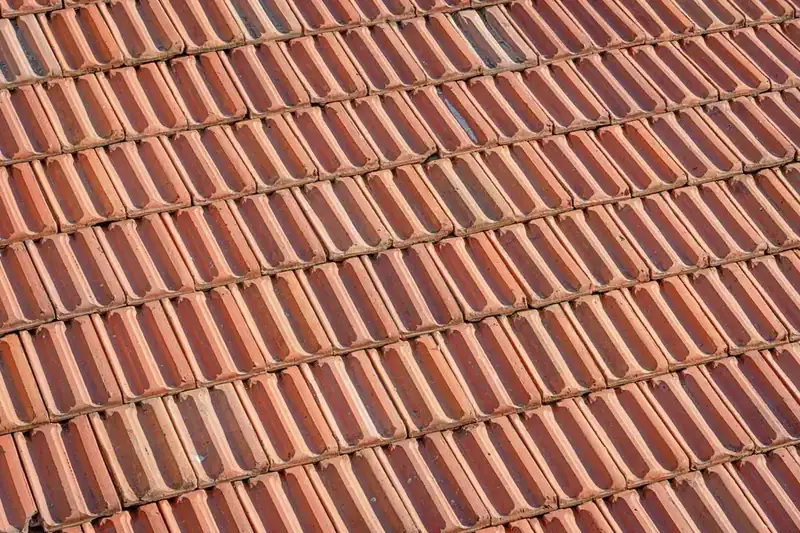
What sets these streets apart is the Article 4 direction that took effect on 21 January 2016. It requires planning permission for all alterations to the roof of a house, as well as for porches, solar panels and painting the outside walls. In practice, putting back a slipped slate or rebedding a ridge tile in matching materials counts as repair and needs no application. Changing to concrete tiles or a man-made slate, adding a rooflight, or putting in a dormer all need one, and the council’s own guidance favours replacing non-traditional coverings with clay or natural slate. Allow eight weeks or so for a decision, and get your roofer to price the work in the material the council will accept. A quote for something cheaper that gets refused is no use to you.
The usual faults here are the ones you’d expect on houses this size and age. Tall chimney stacks need repointing. Lead flashings have been patched too often. Clay tiles have crumbled at the nibs. Valley gutters behind decorative gables fill with leaves from the street trees.
Over the railway into Park Hill: Wates houses and flat roofs
Cross the tracks and the buildings change completely. In the 1960s the Croydon builder Wates took on about 120 acres south-east of East Croydon station. After six years of negotiation it agreed a masterplan with the architect and planner Anthony Minoprio and began replacing what its brochure called “rambling, obsolete Victorian houses” with a planned estate it named Park Hill Village. Houses were turned away from the roads, with garages reached from service roads and shared gardens run by garden trusts funded by an annual service charge. Some neighbourhoods were designed by outside architects. Team 4, the young Norman Foster and Richard Rogers among them, worked on part of it. Austin Vernon & Partners designed atrium houses on Tipton Drive and Copping Close. Much of the rest came from Wates’ in-house architects under Kenneth Bland.
St Bernards
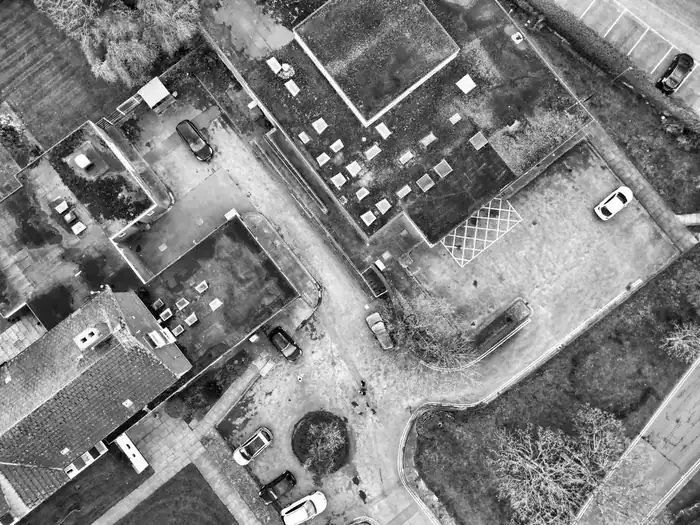
The best known group is St Bernards, off Chichester Road. It has 21 houses built between 1969 and 1971 to designs by the Swiss practice Atelier 5, in stepped brick terraces on the slope with flat roofs and rooflights. Pevsner called it a group with few equals in Britain. It became a conservation area in October 2008, and every house in it is locally listed. You can read the council’s summary on its St Bernards conservation area page.
What goes wrong on these roofs
Flat and very low roofs from this period are now well past their first covering, and most have been re-felted at least once, not always well. The faults we see are water ponding where the deck has sagged, outlets choked with leaves, rooflight upstands that were never tall enough, and joints that leak where a flat roof meets a parapet or the brick wall of the next house up the slope. An old felt roof can usually be patched for a year or two. If it has blistered all over, though, the deck underneath is probably wet, and a properly insulated new covering is the better buy. Our flat roof repair service covers the options. Before choosing a new finish, check whether a management company or garden trust has rules about how the houses look, and check the conservation area position if you live in St Bernards.
Addiscombe’s East India Estate: slate, deep eaves and villas split into flats
Head north-east towards Addiscombe Road and you reach the oldest planned streets on the route. The East India Company ran a military academy at Addiscombe House from 1809, and about 3,600 cadets trained there before it closed in 1861. That year the buildings and 88 acres were sold at auction to the British Land Company for £33,600. The company divided the land into plots for speculative builders. Elgin Road came first in 1862, and over 118 lots on Canning Road and Clyde Road soon followed. Many roads took the names of British figures from the 1857 rebellion in India, hence Havelock, Outram and Canning. During the demolition more than a million stock bricks from the college were auctioned off, and some may be in the walls of the houses that replaced it.
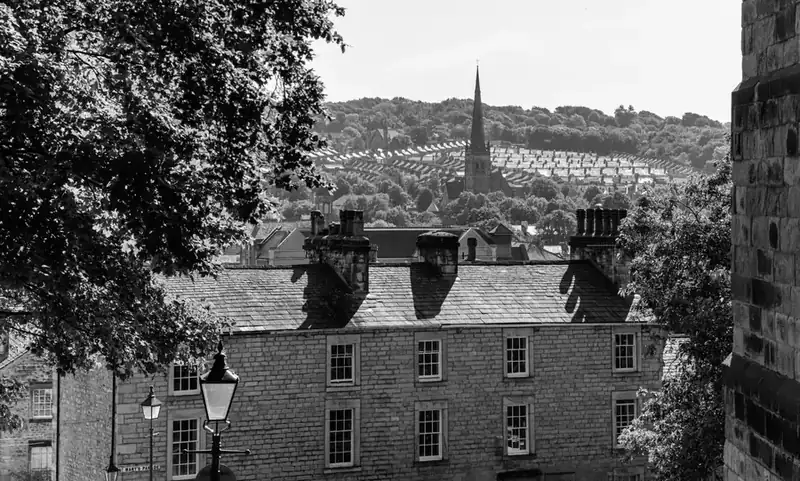
Today the estate is a conservation area, designated in March 2008, with 57 locally listed buildings. The typical house is a detached or semi-detached Italianate villa in yellow London stock brick, with a shallow-pitched slate roof and wide projecting eaves on carved brackets. There’s also a group of red brick Arts and Crafts villas with front gables on Havelock Road and Elgin Road. The council’s East India Estate page links to the full appraisal, which names non-traditional roof materials, lost chimneys and roof extensions visible from the street among the threats to the area.
What fails on a shallow slate villa
Shallow pitches suit slate less well than steep ones. Wind can drive rain uphill under the laps, and the rain gets in faster once the original nails have rusted through and slates start slipping. That’s usually the problem on these roofs, more than the slate itself, which is often still sound after 150 years. The deep eaves cause trouble too: the brackets and soffit boards stay damp in shade and rot from the back, and since there’s usually a gutter fixed to them, the rot and the overflow make each other worse. Many villas here have been split into flats, which complicates every roof job. We explained who pays and how the decision gets made in our guide to roof repairs in Croydon’s converted flats.
Bingham Road and the College Estate streets
North of the conservation area, two smaller areas are local heritage areas instead. The Addiscombe College Estate area covers Inglis Road, Nicholson Road and part of Grant Road, with Victorian houses dating from 1862 to 1900. The western end of Bingham Road has Arts and Crafts semis and terraces from between 1890 and 1910, with continuous ground-floor bays, half-timbered gables and tall central chimney stacks. They were built when a horse tram terminus by Bingham Road Bridge was bringing new buyers out from town. On the terraces nearby, look out for the butterfly roofs at the back, which drain into a central gutter that is easy to forget about until it overflows.
Shirley’s 1930s semis, from Wickham Road to Monks Orchard
Carry on east past the Shirley Road junction and the houses get newer. Most of Shirley was built in the 1930s housing boom, mostly as semi-detached houses on what had been the grounds of big country houses: Shirley Park, Spring Park, Shirley Oaks and Monks Orchard. The Monks Orchard estate dates from the same decade. The name probably comes from a family called Monk, not from any monastery.
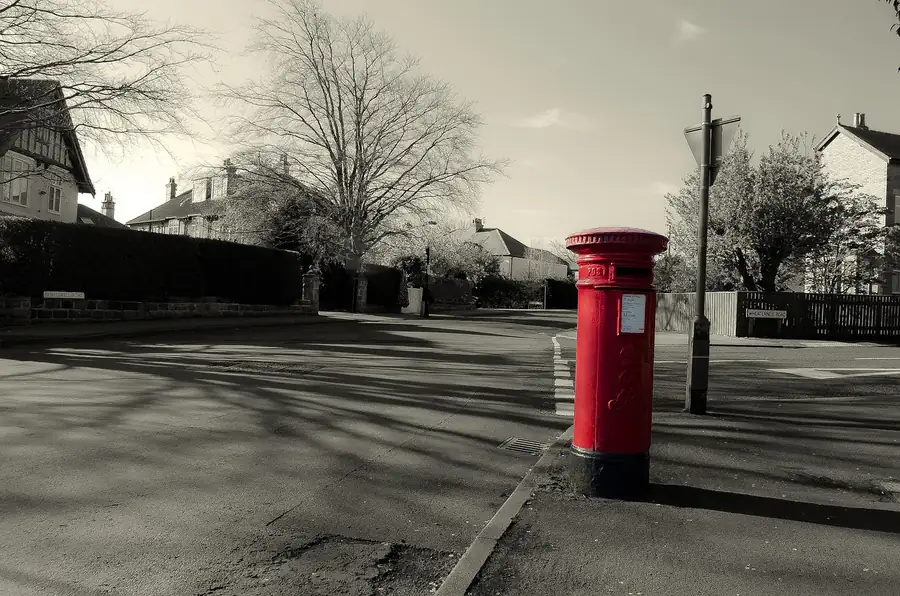
The roofs are simpler than in Addiscombe: hipped or gabled, often re-covered in concrete interlocking tiles at some point since the 1960s, with a small tiled or leaded roof over each front bay. Shirley also has a high proportion of later flat-roofed rear extensions and garages, and at our survey visits they leak more often than the main roof does. Where two halves of a semi have been re-roofed at different times, the joint between them on the ridge and hips needs a close look too. For the problems these houses have in common across the borough, see our guide to Croydon’s 1930s semi roofs.
Climbing towards Shirley Hills: pines, cottages and long gardens
Past Spring Park the land rises to the heath and woods of Shirley Hills and the Addington Hills, and the plots get bigger. Two pockets here are local heritage areas. The first is a stretch of Upper Shirley Road, between The Surprise pub and number 127 on one side and from Shirley Palace to The Dene on the other. Maps from 1868 show a hamlet at the crossroads with Oaks Road and Sandpit Lane, which had sand pits and a brewery until about 1892. Its cottages and terraces still follow that old layout. The second is the Bishops Walk area, along the old drive to Addington Palace, where the first houses went up in the 1920s and sit well back in mature gardens. Shirley Windmill, a tower mill rebuilt in 1854 after the earlier mill burned down, is a listed building nearby.
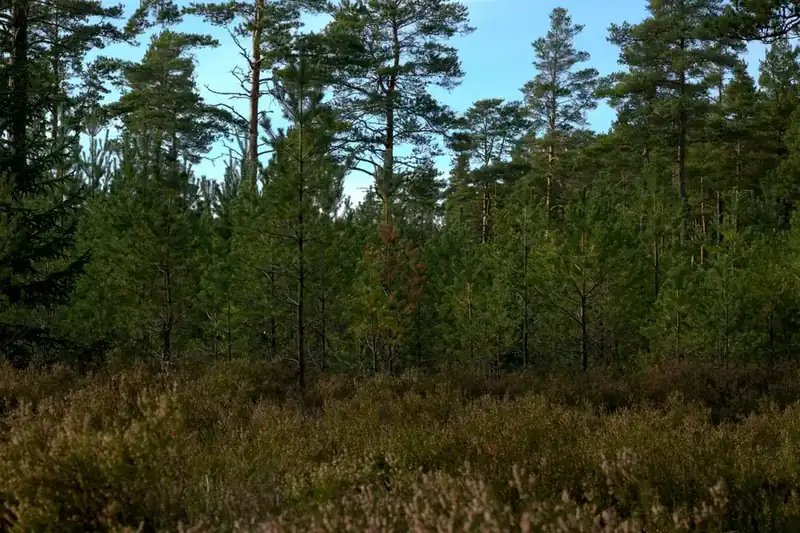
Pines cause their own problems. Their needles are fine enough to pass through most gutter guards, and they pack into a dense mat in gutters, in the side locks of concrete tiles and around the back of chimneys. That mat holds water against the roof for weeks. The houses near the hill also have long front gardens, steep drives and big trees, so scaffold and skip positions often take more planning than the repair itself. A roofer who has quoted without looking at the access is guessing.
Which rule applies to your street: a Croydon Council checklist
All three districts are in the London Borough of Croydon, so Croydon Council handles planning permission, building control and tree consent across the whole route. What changes from street to street is which designation, if any, applies.

- Chatsworth Road is the strict one: a conservation area with an Article 4 direction on top, so any roof alteration, a change of material included, goes to the council first.
- The East India Estate and St Bernards are conservation areas without an Article 4 direction for now, though the council keeps the right to serve one. Permitted development rights are narrower than usual, and anything visible from the street needs thought.
- The Addiscombe College Estate, Bingham Road, Upper Shirley Road and Bishops Walk are local heritage areas. The council’s local heritage areas page says they add no extra consents and leave permitted development rights alone. The label only counts once you put in a planning application.
- On every other street in the three districts, like-for-like re-roofing and repairs need no planning application.
Two rules apply on every street. Re-covering more than a quarter of a roof counts as renovation under building regulations, so it needs sign-off and usually an insulation upgrade. Flats and maisonettes have no permitted development rights for roof alterations, which matters on Addiscombe’s converted villas.
Rough 2026 prices for roof work in Addiscombe, Shirley and Park Hill
These are guide ranges including VAT, for normal access on a two-storey house. A survey gets you a firm figure. Scaffold and access can move the total more than the repair itself, especially on the big villas and the sloping plots towards the hills.

Chatsworth Road and East India Estate villas
- Refix or replace a few slipped slates with matching natural slate: £250 to £650
- Repoint a large chimney stack and renew its lead flashings, with scaffold: £1,500 to £3,500
- Repair rotten eaves brackets and soffits along one elevation: £700 to £2,000
- Strip and re-slate a two-storey villa in natural slate: £18,000 to £32,000
Park Hill’s 1960s and 1970s houses
- Patch a split or blistered felt roof, or clear and reseal an outlet: £250 to £750
- Rebuild a low rooflight upstand and reseal the rooflight: £600 to £1,500
- Re-cover a whole-house flat roof with insulation and a new membrane: £6,500 to £12,000
Addiscombe terraces and Bingham Road semis
- Re-line a butterfly roof’s central gutter: £1,500 to £3,800
- Re-slate the front slope of a terrace: £6,500 to £11,000
Shirley semis and houses towards the hills
- Re-cover or reflash a bay roof: £400 to £1,000
- Re-cover a flat-roofed rear extension or garage: £1,500 to £3,800
- Full concrete tile re-roof of a semi: £8,500 to £14,000
- Clear pine needles from gutters, valleys and tile locks: £120 to £350
Reading quotes side by side, look for different things in each district. On the conservation area streets, the quote should name the slate or tile and where it comes from, because a vague “natural slate” can mean anything from Welsh to the cheapest import. In Park Hill, see whether insulation and new edge trims are in the price or waiting as extras. In Shirley, find out who is making good the junction with next door’s roof. A builder who has left all three questions blank hasn’t really looked at your house.
Frequently asked questions
Is Addiscombe a conservation area?
Part of it is. The East India Estate conservation area covers the grid of Victorian roads laid out on the old East India Company college grounds after 1861, including Canning Road, Clyde Road, Elgin Road, Havelock Road and Outram Road. Croydon Council designated it in March 2008. The rest of Addiscombe is not a conservation area, although Inglis Road, Nicholson Road, part of Grant Road and the western end of Bingham Road are local heritage areas.
Do I need planning permission to re-roof a house on Chatsworth Road?
If the work changes the roof, yes. An Article 4 direction that took effect on 21 January 2016 means any alteration to the roof of a house in the Chatsworth Road conservation area needs planning permission from Croydon Council, and so do solar panels and repainting the outside. Replacing a few broken slates or clay tiles with matching ones counts as repair. Switching to a different covering, adding rooflights or changing the shape does not.
Does a local heritage area stop me re-roofing in Shirley?
No. Croydon's local heritage areas, which include the stretch of Upper Shirley Road near Shirley Windmill and the Bishops Walk area, add no extra consent requirements and leave permitted development rights as they are. They only come into play when you make a planning application, because the council then gives weight to the character of the area. Most of Shirley has no heritage designation at all.
Who looks after the roofs at St Bernards in Park Hill?
Owners are responsible for their own houses, but St Bernards is a conservation area and every one of its 21 houses is locally listed. A management company also sets the exterior colours. Before anyone changes a roof finish, rooflight or edge detail, check the deeds and the management company's rules, and remember that a material or appearance change in a conservation area may need planning permission.
Free roof survey and a fixed written quote
Anywhere in Croydon and the surrounding CR postcodes. No call-out fee.