
15 September 2026
Gutters, Downpipes And Cast Iron On Croydon's Older Roofs: Repair, Replace Or Live With It
Thousands of Croydon's Victorian and Edwardian houses still carry their original cast iron rainwater goods. How to identify them, what fails, and the three honest routes forward.
Walk along almost any road in Addiscombe, South Norwood or the older streets of South Croydon and look at the gutters rather than the roof. On a good number of those houses the rainwater goods are still the originals - cast iron, hung there when the house was built, and quietly getting on with it a century and a bit later. Cast iron that is kept painted will run for a hundred years or more. uPVC, the thing most people replace it with, is generally reckoned to give twenty to thirty years before it turns brittle and the seals let go. Which is an odd sum when you look at it: the old material routinely outlives its own replacement. Croydon also has twenty-one conservation areas, and in a few of them what hangs off the eaves is not purely a matter of taste. So here is how to tell what you have got, what goes wrong with it, and which of the three honest routes forward applies to your house.
Cast iron, uPVC or aluminium? Telling them apart from the pavement
You can usually settle this from the ground in under a minute, and it is worth doing before anyone quotes you for anything.
Start with the joints, because they give the game away. Cast iron lengths overlap and are bolted together through the socket, so at every join there is a bolt head, a squeezed-out line of old mastic and very often a rust tear running down from it. uPVC does the opposite: lengths clip into a union with a rubber seal and a deliberate gap for expansion, and the gap is visible. Aluminium is either jointed with neat brackets or, on a modern seamless installation, has no joints along the run at all.
Then look at the profile. The deep half-round and the ogee - that stepped, moulded shape a bit like a skirting board turned on its side - are the period profiles, and they throw a proper shadow line under the eaves. Plastic tends to be shallower and rounder. Colour helps too. Cast iron is painted, so it chips and shows edges; uPVC is coloured through the material and ages by going chalky and slightly grey rather than flaking.
If you can safely reach it, tap it. Iron is dead and solid under a knuckle. Plastic rings and gives. Aluminium is the confusing one because it is metal but light, which is precisely why it exists as an option. Any decent survey will identify all of this as a matter of course, and if you want somebody to look properly at what is up there, that is what a gutter survey is for.
How cast iron actually fails, and why it starts where you cannot see it
Here is the thing that catches people out. Cast iron almost never fails on the face you are looking at. It fails from behind.
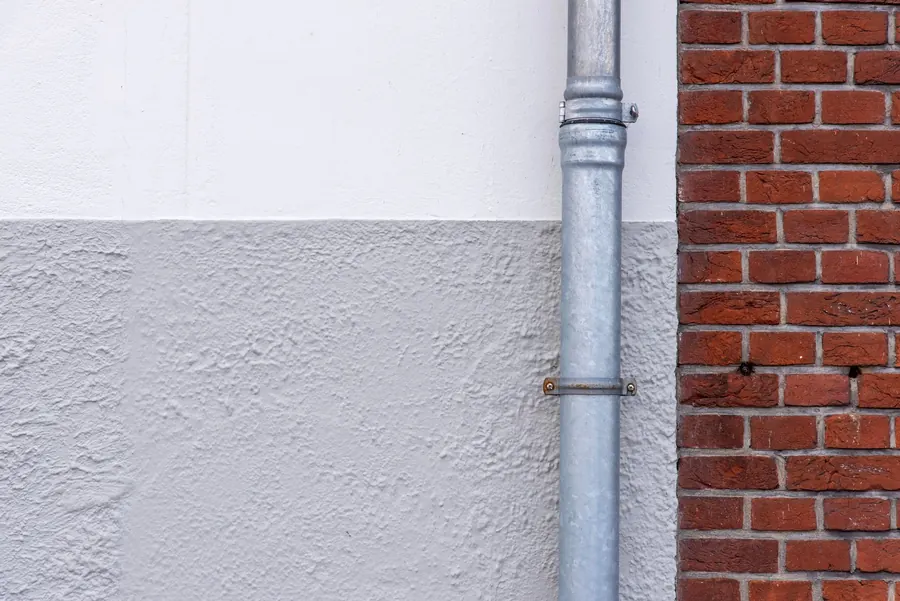
When the house was built, the outside of the gutter got painted because that is the bit people see. The inside got a coat if you were lucky and the back of the downpipe, the face flat against the brickwork, frequently got nothing at all. Water and leaf mould then sit in the bottom of the gutter for decades, and rust works outwards from the inside until it finally shows as a weep on the front. By the point a stain appears on the outside, the metal behind it has usually been going for years.
The joints
Every bolted socket is a small maintenance item that nobody maintains. The bedding compound hardens and shrinks, the bolt corrodes and expands, and eventually the joint opens just enough to drip. This is the single most common cast iron fault and, encouragingly, the cheapest to put right.
The ears
Older downpipes are often “eared” - cast with small lugs either side so they can be nailed straight to the wall. Those lugs are the weak point in a brittle metal. Over-tightening cracks them, and so does a pipe full of ice, which has nowhere to expand and splits the casting instead. A pipe hanging off one remaining ear is not a cosmetic problem; it is a pipe about to come down.
The hopper head
The open funnel at the top of some downpipes catches everything the roof sends it, and on the older Croydon stock it catches a fair amount. Silt builds in the bottom, holds water permanently against the metal, and rots the hopper from the inside out. Some are worth more than their owners realise - Historic England notes that decorative and date-stamped hoppers can be part of a building’s architectural interest, sometimes recording the year the house was finished.
What one winter of a leaking downpipe does to a solid brick wall
This is the part that turns a cheap job into an expensive one, and it happens on a timescale of months rather than years.
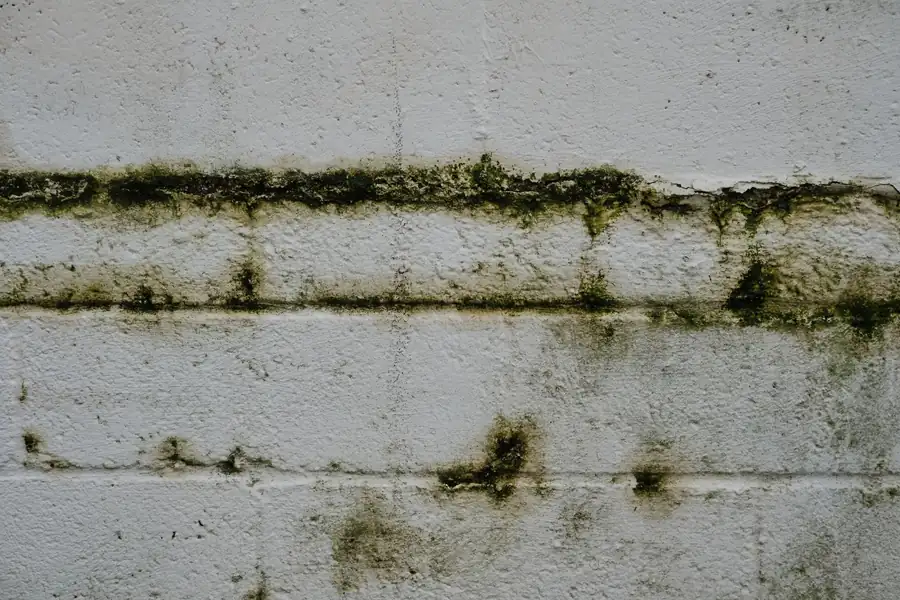
A Victorian or Edwardian house in Croydon has a solid wall, typically a brick and a half thick, with no cavity behind it to interrupt anything. A downpipe leaking onto that wall does not just make it wet on the outside. It saturates the full thickness, and a saturated wall stops behaving like a wall.
The first thing it loses is its insulation. Wet masonry conducts heat much better than dry masonry, so the affected strip runs cold, and cold internal surfaces are exactly where condensation and mould turn up first. Then frost gets involved. Water sitting in the outer face of a brick expands as it freezes, and after enough cycles the face of the brick blows off in flakes. Once that has happened the brick is open, it drinks faster, and the damage starts feeding itself. Meanwhile the mortar is quietly washing back, because lime and soft mortars were designed to be sacrificial and this is them doing their job. The joints recede, and the wall gains another route inward.
Historic England puts it plainly in its guidance: leaking gutters and downpipes are one of the commonest causes of damp walls. The repair to the pipe might be a couple of hundred pounds. The repointing, the frost-damaged brickwork and the internal replastering that follow a couple of neglected winters are an entirely different conversation, and none of it was necessary.
Repair and repaint: the route most Croydon houses should try first
The default assumption when something is a hundred years old is that it must be finished. With cast iron that is usually wrong, and it is worth pushing back on anyone who reaches for full replacement before looking properly.
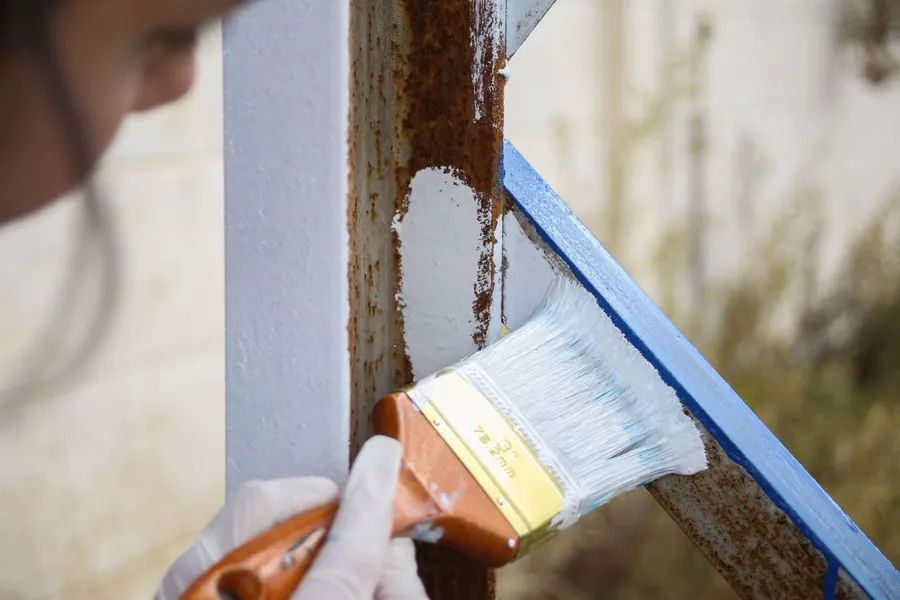
A proper overhaul is a genuinely unglamorous list. The run comes down or gets worked in place, the inside is scraped back to sound metal, the rust is treated, a primer made for ferrous metal goes on, and it gets two top coats. Failed joints are cut out, the sockets cleaned, and the joint remade with new bedding and a new bolt. Individual lengths that are cracked or pitted through are swapped for salvaged or new castings, which is entirely possible because the profiles are still made and reclamation yards across Surrey and Kent carry the common ones. Brackets that have rusted out get replaced and the falls reset while everything is accessible.
Historic England’s guidance on inspecting and maintaining rainwater systems makes the same case: where a system is otherwise working, decoration and like-for-like repairs are usually all that is needed. It also makes a point worth stealing for any house, listed or not - a downpipe should ideally stand off the wall rather than sit flat against it, so water that does escape runs away instead of into the brickwork, and so there is room to get a brush behind it next time.
Cost-wise this route is the cheapest of the three by a distance, and it buys another few decades. The catch is that it is labour at height rather than a product, so most of what you pay for is access and time, not materials.
When replacement is honest: cast iron, aluminium or uPVC
Sometimes the system really has gone - pitted through in multiple places, cracked castings along a whole elevation, brackets pulling out of rotten timber. At that point there are three routes and they suit different houses.
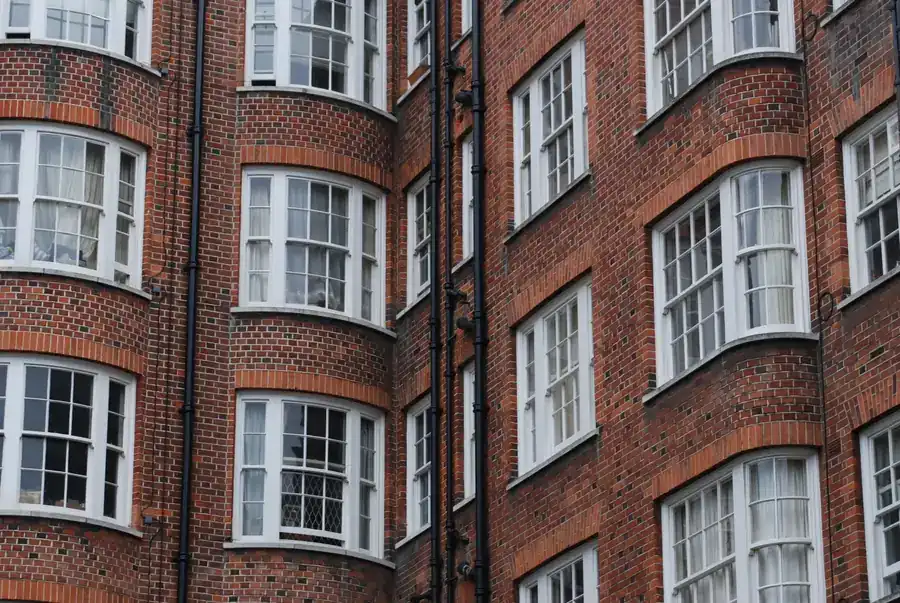
Like-for-like cast iron
The right answer on a house where the elevation matters. It looks correct because it is correct, it will outlive everyone involved if somebody keeps painting it, and individual lengths stay replaceable in future without disturbing the rest. It is also the dearest option to buy and to hang, because the stuff is heavy and putting it up properly takes two people and sound timber to fix into.
Aluminium
The option most people have never been offered, which is a shame. It comes in deep ogee and half-round profiles that read correctly from the street, it is powder coated rather than dyed so it holds its colour, it will not rust, and it weighs a fraction of what iron does, which brings the installation cost down. On price it sits between the other two. For a Croydon bay-fronted terrace where the budget will not stretch to iron but plastic would look wrong, this is very often the sensible middle.
uPVC
Cheap, light and completely fine on the right house. On a 1930s semi in Shirley or a postwar estate house in New Addington, nothing period is being lost and the money is better spent elsewhere. Where it goes wrong is a Victorian frontage. A shallow plastic profile in place of a moulded ogee is obvious from across the road, and it stays obvious.
If the fascia behind the gutter has rotted - and after years of an overflowing gutter it often has - deal with that at the same time, because fascias and soffits are what the brackets are screwed into and new guttering on soft timber is a wasted job.
Conservation areas, Article 4 and the houses where the choice is not entirely yours
For most Croydon homeowners this is not a planning matter at all. Replacing rainwater goods is normally maintenance rather than development, and nobody needs to ask permission to put a gutter back up.
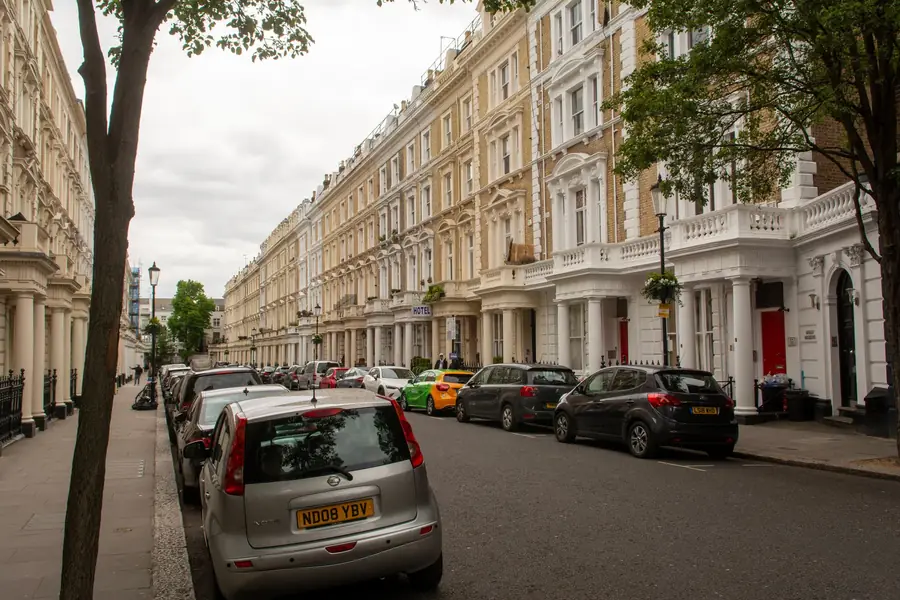
Two situations are different. The first is a listed building, where changing the material is a listed building consent question - Historic England’s position being that replacing cast iron in cast iron does not need consent, which rather implies that replacing it in something else might. The second is an Article 4 direction, which withdraws permitted development rights in a defined area. Croydon has these covering the Chatsworth Road conservation area in Addiscombe, selected properties in The Waldrons, and the Kenley Aerodrome conservation area. You can check whether your street sits inside one of the borough’s twenty-one designated areas on Croydon Council’s conservation areas directory, and it takes two minutes.
Even where nothing formally applies, conservation area status tends to bite later rather than now. If you ever come to apply for something bigger, a front elevation that has been plasticised does not help your case. The wider picture of what does and does not need consent is covered in more detail in our guide to planning permission for roof work in Croydon, which is worth a read before you commit to anything visible from the street.
Working out which of the three routes your house actually needs
Strip away the sales pitch and this is a short list of questions you can mostly answer yourself.
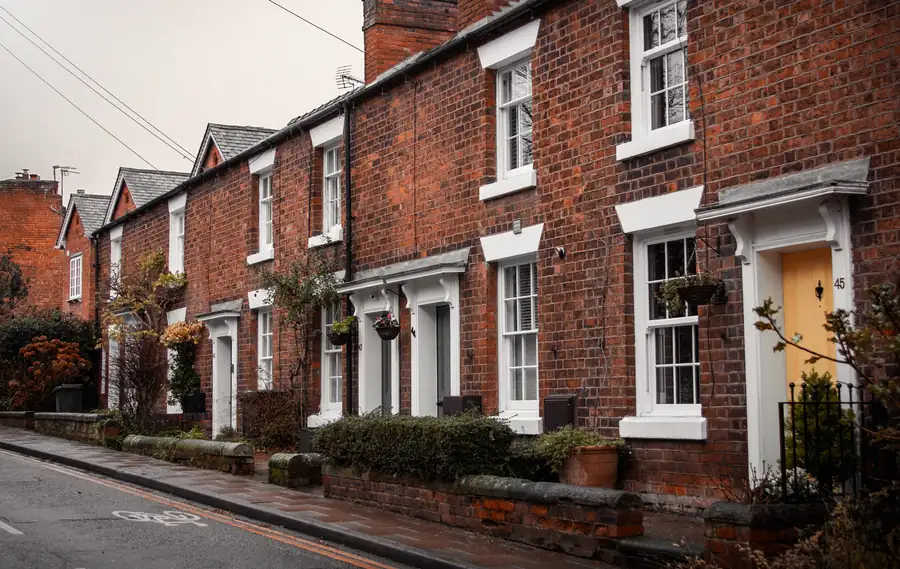
Start with how much of the system is actually failing. Three bad joints and a cracked length is a repair, whatever anyone tells you. Pitting along an entire run with the brackets letting go is a replacement. Then check whether the metal is sound where it counts: if a screwdriver goes into the base of the gutter, that run is done, and if it does not, you have time.
After that it is mostly about the house rather than the pipework. A front elevation on a period terrace is worth spending money on. A rear addition that only the neighbours see is not, and there is no shame in putting plastic on the back and iron on the front - plenty of people do. The last question is how long you intend to stay, because iron is a fifty-year decision and plastic is a twenty-year one, and those are very different things to be buying.
Then there is timing, which people rarely think about until they are quoted. Anything involving paint needs dry weather and a surface that is actually dry underneath, so this is spring and summer work, not a December job. If you are reading this in autumn with water coming over the front of the gutter, the thing to book now is a clear and a proper look, and the overhaul for when the weather turns. Getting the water going down the pipe again stops the wall taking damage over the winter, which is the expensive part, and the decision about iron or aluminium or plastic will wait until March quite happily.
Frequently asked questions
How do I know if my guttering is cast iron?
Tap it. Cast iron gives a dull, dead thud and barely moves; uPVC rings hollow and flexes under a knuckle. Then look at where two lengths meet. Cast iron is bolted through an overlapping socket, so you will see a bolt head and a squeezed line of old mastic, often with a rust stain running from it. uPVC clips together over a rubber seal with a visible expansion gap. Aluminium sits between the two - light like plastic, but with the crisp painted edges and deeper profile of metal.
How often does cast iron guttering need repainting?
Roughly every five to eight years on an exposed elevation, and you can stretch that on a sheltered one. The interval matters less than the condition: the moment bare metal or orange bloom is showing through, the clock has started, because cast iron does not rust slowly once the paint film is broken. A section repainted before it pits will outlast one that got its first coat in twenty years by a very long way.
Is aluminium guttering worth the extra over uPVC?
On a period house in Croydon, usually yes. It holds a deep ogee or half-round profile that actually looks right against a Victorian elevation, it is powder coated rather than coloured all the way through so it does not go chalky in sunlight, and it will not rust. It costs more than plastic and less than cast iron. On a postwar estate house where nothing period is at stake, uPVC is the sensible answer and aluminium is money spent for no gain.
Do I need permission to swap cast iron guttering for uPVC in Croydon?
For most unlisted houses, no - replacing rainwater goods is normally treated as maintenance rather than development. Two situations change that. If the house is listed, altering the material is a listed building consent matter, and Historic England's position is that like-for-like cast iron replacement does not need consent while a change of material may. If you are inside one of the borough's Article 4 areas, permitted development rights have been withdrawn and it is worth a call to Croydon Council before ordering anything.
My wall is damp but the gutter above it looks fine. What else could it be?
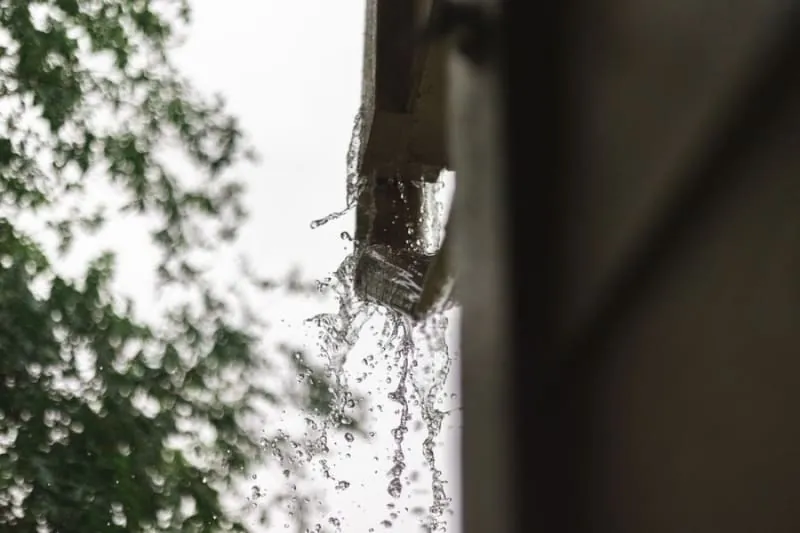
Check the downpipe rather than the gutter, and check it while it is actually raining. A split socket joint or a cracked fixing ear lets water out in a narrow jet that only appears under flow, and by the time anyone inspects on a dry day there is nothing to see. The other common culprit is a downpipe sitting hard against the brickwork with no gap behind it, which keeps that strip of wall permanently wet even when the pipe itself is sound.
Free roof survey and a fixed written quote
Anywhere in Croydon and the surrounding CR postcodes. No call-out fee.