
2 September 2026
Concrete Tiles On Croydon Roofs: Spotting A Postwar Roof That's Finished
Much of Croydon was re-roofed in concrete tiles after the war and again in the 1960s and 70s. How to tell whether yours has years left or is quietly wearing out.
Stand on any high ground in the borough - the ridge at Shirley Hills, or the upper floors of anything in central Croydon - and the roofscape below is mostly concrete. Not the pretty part of the story, but the true one. Croydon took more flying bombs in the summer of 1944 than any other London borough, and the rebuilding, the estate expansion that followed, and a second wave of re-roofing through the 1960s and 70s all happened during the decades when concrete tile was the default British roof covering. Those roofs were designed around a sixty-year life. The earliest are now past it, and the 1970s ones are arriving. This is how to work out where yours sits: what a concrete tile is, what wears out first, and why the answer is usually less alarming than it sounds.
Watch: spotting a postwar concrete tile roof that's reaching the end of its life.
How Croydon ended up under so much concrete
Between June and September 1944, local records count 141 V-1 flying bombs falling on Croydon - the heaviest count of any London borough - destroying roughly 1,500 homes and damaging around 54,000 more. Damage on that scale is not repaired with matching handmade clay tiles. It is repaired with whatever a rationed building industry can produce in volume, and that was concrete.
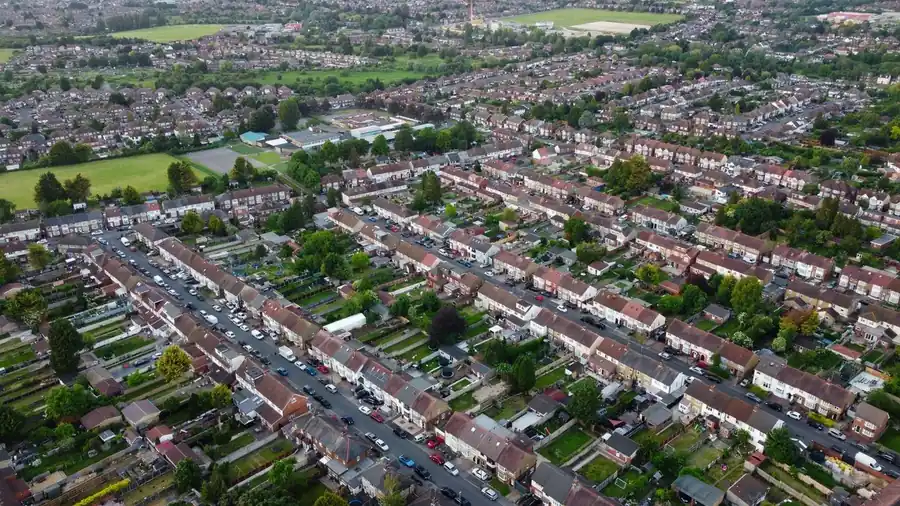
The postwar decades then doubled down. New Addington grew into a town in its own right, infill estates filled the gaps left by bombing across Norbury, Broad Green and Waddon, and by the 1960s the large interlocking concrete tile had become the standard covering for anything new. Then came the third wave, and the one that catches people out: through the 1960s, 70s and 80s, thousands of Victorian and interwar Croydon houses had their worn original coverings stripped and replaced with concrete. If you own a house from 1890 or 1935 with a concrete roof, you are not looking at the original - you are looking at a re-roof that is itself now fifty or sixty years old, and due its own conversation about replacing the roof covering.
What a concrete tile actually is
A concrete roof tile is sand, cement and pigment, pressed into shape and cured. That makes it strong, cheap and consistent, and it is why the material took over so completely. It also makes it fundamentally different from clay, which is fired to something close to stone and can shrug off a century.
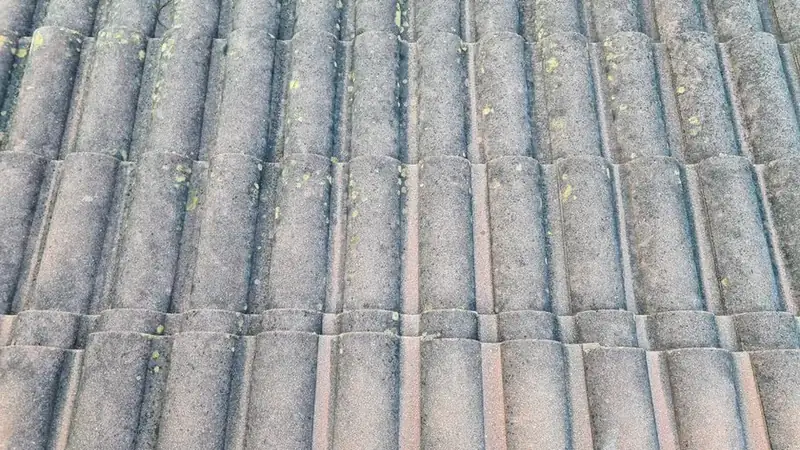
That recipe ages in its own way. Older concrete tiles carried their colour as a thin surface layer rather than through the body, so weathering literally wears the face off them. Concrete also stays slightly porous, and porosity plus a Croydon winter means water sitting in the surface and freezing. Each freeze opens the structure a fraction more. Sixty years of that is erosion, not failure - which is exactly why it goes unnoticed.
Two manufacturers dominate what is on Croydon roofs - Marley and Redland - and both have redesigned their profiles repeatedly over the decades. That matters more for repairs than for performance, and it is the reason a roofer sometimes cannot simply order six more of what you already have.
Four things to look for from the ground
You do not need to go up to form a decent first opinion. Pick a bright, low-sun morning and look along each slope edge-on rather than straight at it.
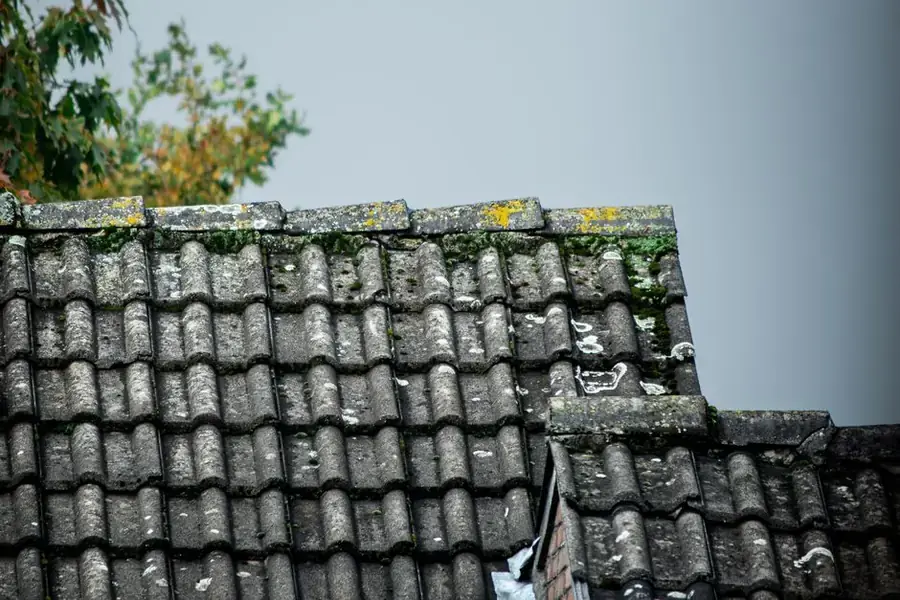
Colour loss is the first clue: a roof that has faded from red or brown to a patchy grey has lost its surface layer. Second, look at the tile edges and noses, where erosion shows first as a rough, crumbling profile instead of a crisp line. Third, look for the shadow-lines of slipped or lifted tiles, which on a large interlocking tile means the fixing has failed rather than the tile. Fourth, check the bottom course above the gutter, because that row takes the most water and shows wear before anything else.
A roof with one of these is fine and wants monitoring. A roof with all four, at sixty years old, is telling you something.
The parts you cannot see: nails, battens and felt
Here is the thing most homeowners get wrong about concrete roofs. The tile is rarely the component that fails. What fails is everything holding it in place, and none of it is visible from the street.
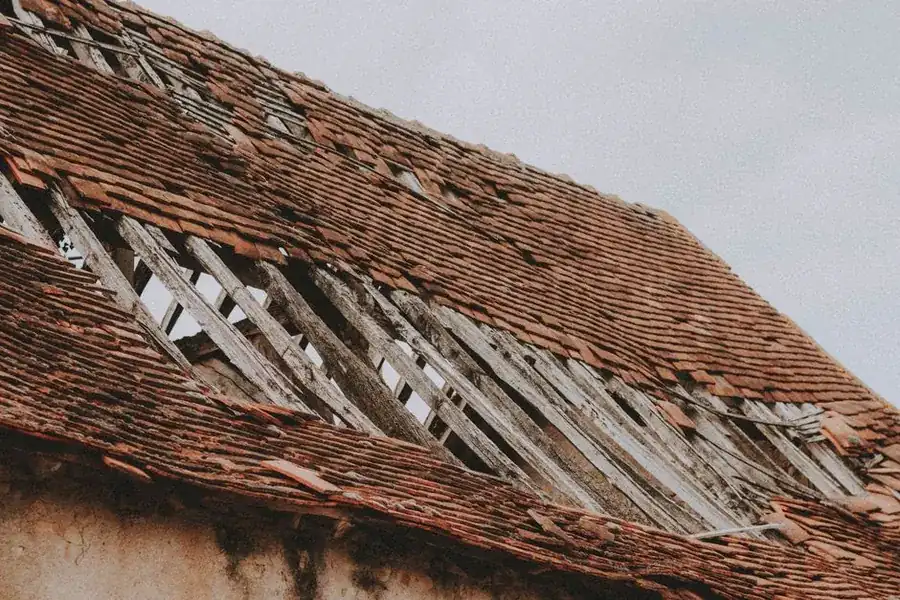
Interlocking tiles are not all nailed - typically the perimeter, the eaves, the ridge courses and every few rows in between, with the rest held by their own weight and the interlock. Those nails were galvanised steel, and galvanising has a working life. Once corrosion has eaten through them, tiles start moving in wind that never troubled them before, and they do it in groups rather than one at a time. Battens fare little better: 1950s and 60s battens were often ungraded, sometimes untreated, and where they have stayed damp under a leak they crumble around the nail holes.
Then there is the felt. Roofs of this era used bitumen sarking felt, which goes brittle with age and tears first at the eaves, where it is exposed over the gutter. Look up under your own eaves from a ladder - if the felt is cracked, curled or has torn away above the gutter line, water that gets past a tile is now running onto the wall plate instead of into the gutter. That single fault causes more rotten roof timber in Croydon than storms do.
Weight: the slate roofs that were given concrete
This section only applies to some houses, but where it applies it matters more than everything above. Natural slate is a light covering. Large interlocking concrete tiles are considerably heavier per square metre. When a Victorian terrace off Whitehorse Road or a stone-built villa in Upper Norwood had its slate stripped and concrete laid in 1972, the roof structure was rarely upgraded to match.
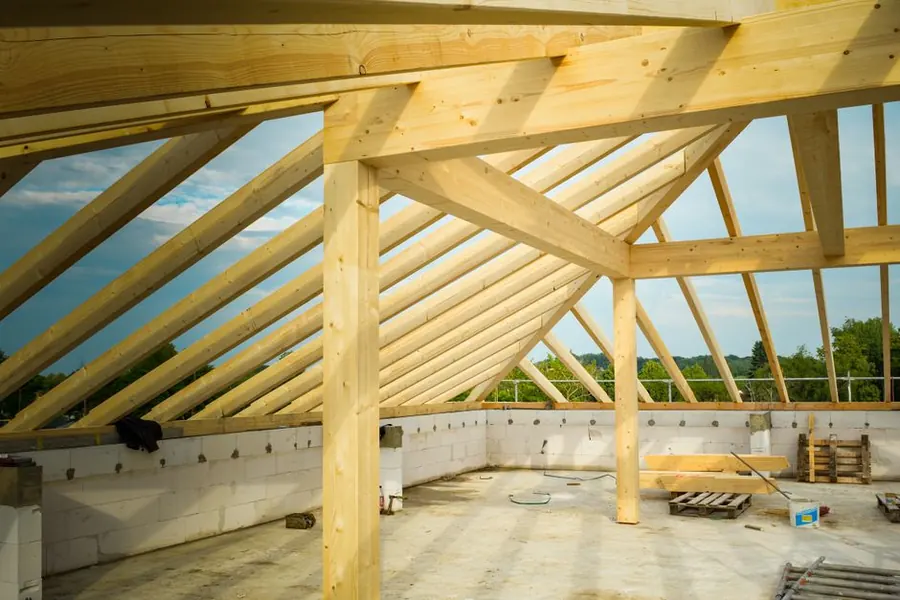
The result is slow deflection. Rafters bow, purlins sag, and the ridge develops a shallow dip or a wave that becomes obvious once you know to look along it rather than at it. From inside the loft you can sometimes see it more clearly: rafters that are no longer straight, or a purlin that has taken a set. It is not usually dangerous and it is not usually urgent, but it changes the sums, because putting concrete back on a structure that is already complaining is throwing good money at a bad decision.
If your house is Victorian and the roof is concrete, that is worth a specific look during any survey. The same goes in reverse for the interwar semis we wrote about in our guide to Croydon’s 1930s roofs - many of those were re-covered in concrete too, though there the weight swap is usually neutral or favourable.
Moss, shade and Croydon’s leafy streets
Concrete tiles hold moss more readily than clay because their surface is rougher and more absorbent, and Croydon gives moss plenty of encouragement. The borough has a heavy tree canopy through Shirley, Selsdon, Sanderstead and the Addington side, and a north-facing slope under mature trees stays damp for most of the winter.
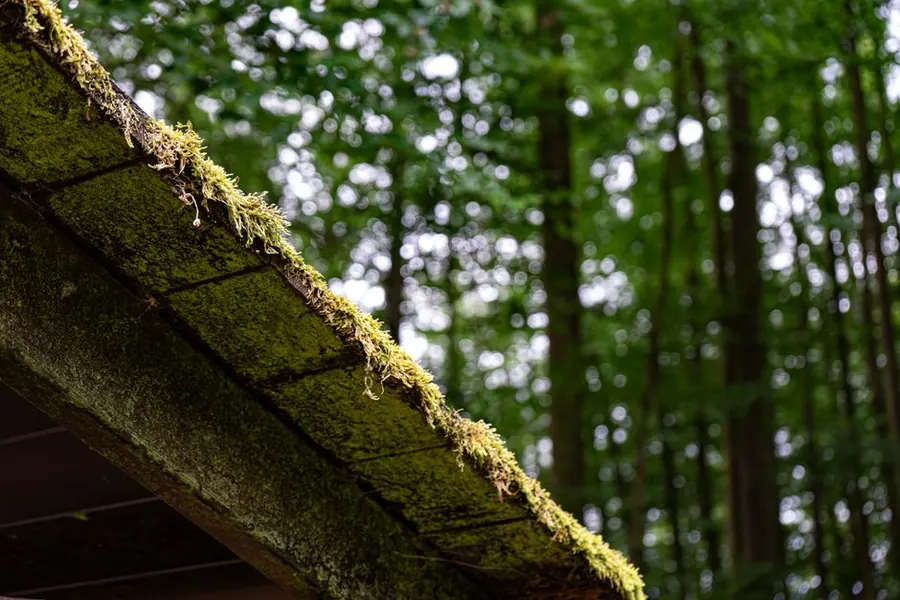
Moss itself does not rot a roof. What it does is hold water against the tile through every frost, accelerating the surface erosion described above, and shed clumps into the gutters where they block outlets. Scraping it off is easy and largely pointless on its own, since it returns; the useful work is trimming back what is shading the roof and keeping the gutters running.
Pressure washing deserves a warning. It strips the weathered surface off an old concrete tile along with the moss, and takes years off a roof that was doing fine. If a passing trader offers to jet-wash and then seal your roof with a coating, the answer is no - a decision worth reading about alongside the rest of the common roof problems that get diagnosed on doorsteps rather than from ladders.
Patch, part-strip, or start again
The good news at the end of all this is that most concrete roofs in Croydon are not finished, they are worn, and worn roofs get repaired.
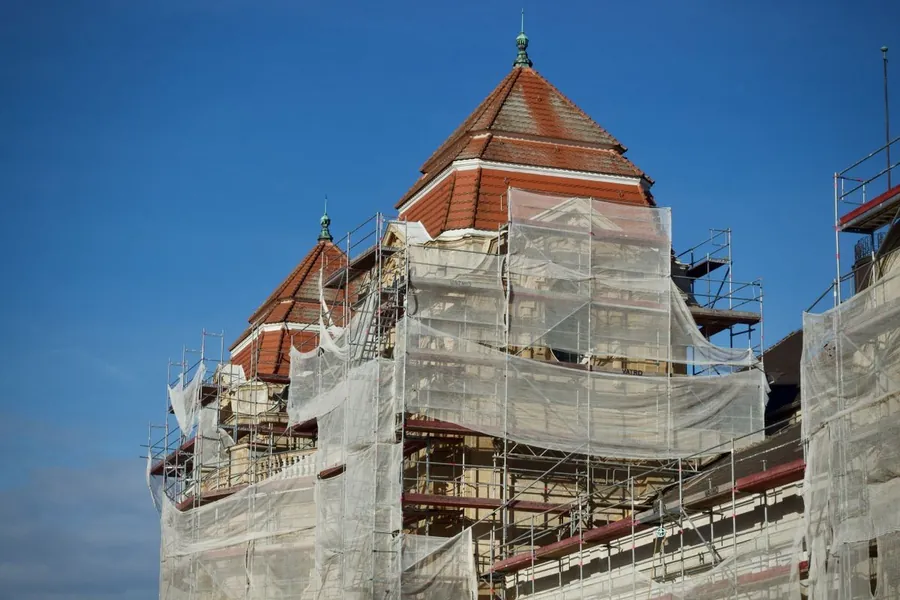
Under roughly forty years, individual repairs are almost always right: refix slipped tiles, replace broken ones, repair the felt at the eaves, sort the gutters. Between forty and sixty, the sensible move is a proper inspection of the fixings and the underfelt, because the decision hinges on those and not on the tiles. Past sixty, with widespread surface loss and tiles moving in ordinary weather, a strip and re-cover usually costs less over ten years than the queue of repairs that replaces it.
A couple of things to know before that day arrives. A like-for-like re-covering does not normally need planning permission, though the Planning Portal’s guidance on roof alterations is the place to check if you are changing shape or material or the house sits in a conservation area. And renewing a roof covering is work on a thermal element, so it brings building regulations approval into play, usually with an insulation upgrade attached. Whoever you ask to quote, check they are registered with a scheme such as TrustMark before anything is booked.
A concrete roof is not a bad roof. It is a roof with a known service life, most of the way through it, and worth twenty minutes of honest looking once a year.
Frequently asked questions
How long do concrete roof tiles last?
Manufacturers have generally worked to something like a sixty-year design life, and plenty of concrete tiles beat it. The catch is that the tile is rarely what fails first - nails, battens and the felt beneath usually give up somewhere between forty and sixty years, which is why a roof can look intact from the pavement while its fixings are done.
How can I tell concrete tiles from clay?
Look at the edge of a broken one if you can find a spare in the garden. Clay is the same colour all the way through and rings when tapped; concrete has a sandy, aggregate-flecked body under a thin coloured surface, and sounds dull. From the ground, large tiles with a deep interlocking rib down one side are almost always concrete, while small flat tiles the size of a paperback are usually clay.
Why has my roof gone from red to grey?
Older concrete tiles carried their colour as a surface coating rather than through the body of the tile. Decades of rain and frost erode that layer away, exposing the grey aggregate underneath. It is a cosmetic change on its own, but it tells you the surface has been weathering for a long time, and a tile losing its face is usually also losing its water resistance.
Can I just replace the broken concrete tiles?
Often, yes - and on a roof under about forty years old that is normally the right answer. The difficulty is matching, because tile profiles have been redesigned repeatedly and a pattern from 1968 may no longer be made. A roofer will usually rob sound tiles from a hidden slope to patch a visible one, then fill the gap round the back with the nearest current equivalent.
Did anyone in Croydon put concrete tiles on a slate roof?
A great many people did, mostly between the 1960s and the 1980s, and it is the one version of this story worth checking carefully. Interlocking concrete tiles weigh appreciably more per square metre than natural slate, and Victorian rafters were sized for slate. If a terrace roof in Croydon has a visible dip or wave along the ridge, an overweight recovering is one of the first things a roofer will look for.
Free roof survey and a fixed written quote
Anywhere in Croydon and the surrounding CR postcodes. No call-out fee.