
22 October 2026
Loft Condensation In Croydon: Why Roof Spaces Drip And Grow Mould
Why Croydon lofts drip and go black with mould, house era by house era, how to tell condensation from a leak, and what the ventilation fixes cost.
Most of Croydon’s houses were built to have cold, draughty, empty lofts. A Victorian terrace in Selhurst or a 1930s semi in Shirley had a coal fire in nearly every room pulling air up the chimneys, single glazing that leaked air at every frame, and a roof space with nothing in it but water tanks and spiders. Air poured through the slates and tiles and kept the timbers dry. Almost none of that still applies. The fires are gone, the windows are sealed, and the loft floor now carries 270mm of insulation, which is the depth the Energy Saving Trust recommends. Meanwhile a family of four puts something like ten litres of water into the air every day just by cooking, washing, showering and breathing. That’s the figure usually quoted, anyway. When that warm, wet air finds its way into a cold roof space and meets felt or slate chilled by a clear night, it turns back into water. That is loft condensation, and in Croydon it shows up differently depending on when your house was built and what has been done to it since.
Why loft condensation turns up in Croydon houses that never had it
The physics is the same as a cold can of drink sweating on a summer table. Air holds more water when it’s warm. Cool it past its dew point and the surplus has to go somewhere, so it settles on the coldest surface it can find. In a loft that surface is the underside of the roof covering, and on a clear, still night the covering can get colder than the outside air, because the slates and tiles lose heat straight to the open sky.
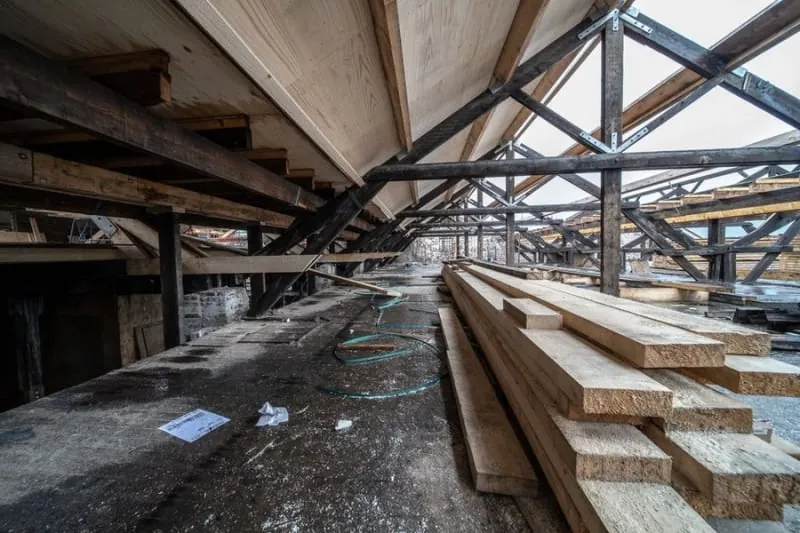
Two things changed in Croydon’s housing that turned this from a rare event into a common one. Thick insulation keeps the heat in the rooms below, so the loft above is now far colder than it was when it sat over a warm ceiling. And the routes that used to let damp air out have been closed off one by one: soffits boxed in with unvented uPVC, gaps between tiles sealed by new underlay, insulation stuffed hard into the eaves. A good share of the callouts we get for roof leak repairs in Croydon turn out to be condensation, with no hole in the roof at all.
The higher ground in the south of the borough makes it worse. Houses on the slopes around Kenley, Coulsdon and Sanderstead sit on more open land than the streets of Thornton Heath, and they see more frost, which means more cold nights for the roof to sweat through.
Victorian and Edwardian terraces: bare slate with a modern loft floor
Walk into the loft of an unaltered terrace in South Norwood, Broad Green or Addiscombe and you’ll usually see the backs of the slates, the battens they hang from, and chinks of daylight between them. There’s no felt. These roofs breathe through hundreds of small gaps, and on their own they rarely have condensation trouble.
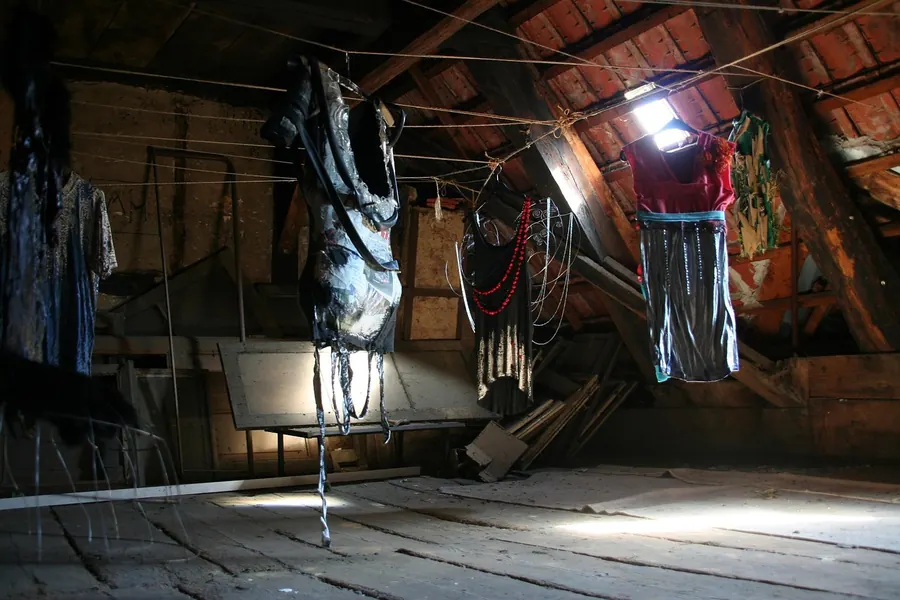
The trouble comes from what gets done to them later. The usual culprit is insulation quilt laid across the joists and shoved right down to the wall plate, which shuts the one route cold outside air had into the bottom of the roof. Spray foam is worse. It gets sold as a cure for slipping slates, but it stops them drying from behind and holds moisture against the battens, which can then rot for years where nobody can see them. And then there’s the washing. A rack of wet clothes left to dry in an unheated loft puts litres of water into the coldest part of the house, and it all ends up on the timber.
The back additions on these terraces need watching too. Many have a shallow lean-to roof with almost no void above the ceiling, so there’s very little room for air to move at all, and a bathroom underneath. Dark spotting on that ceiling in winter is often condensation inside the roof rather than a leak through it.
Interwar semis that were re-felted with bitumen
The interwar estates that cover Shirley, Selsdon, Purley, Norbury and much of Coulsdon were roofed in clay plain tiles with no felt underneath, and the originals ventilate well for the same reasons as Victorian slate. A large number were stripped and re-covered between the 1960s and the 1980s, and those re-roofs went on over black bitumen felt, usually the reinforced type known as 1F.
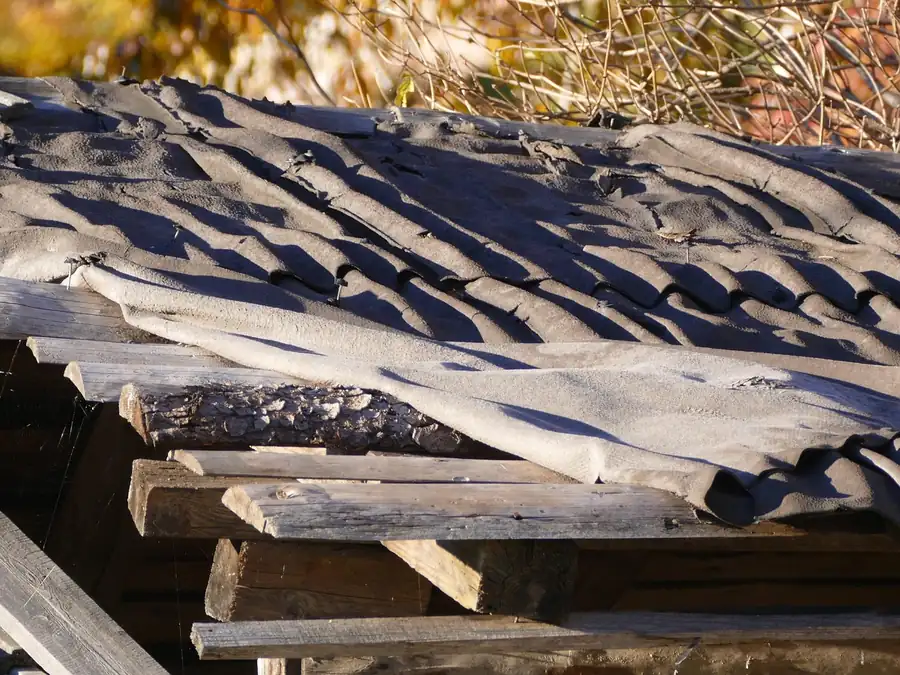
Bitumen felt is close to vapour-tight. That was fine while the loft was cold and the eaves stayed open, because the gaps at the eaves and the felt’s own loose laps let enough air in. Add a thick insulation quilt, then box the eaves in with plain uPVC soffit boards, and the loft becomes a sealed box under a non-breathing lid. Moisture rising from the house condenses on the black felt, runs down it and drips off at the lowest point, often onto the insulation just inside the eaves on the north-facing slope.
Hipped roofs, which most of these semis have, make it harder still. A gable-ended house can at least have a vent in the gable wall. A hip has roof on all four sides, so the eaves and the ridge are the only places air can get in or out. If you own one of these houses, our guide to the roofs on Croydon’s 1930s semis explains what else tends to wear out at the same age.
After a loft conversion: the problem moves into the walls
Croydon has seen a great many loft conversions, from rear dormers on terraces in Thornton Heath to hip-to-gable extensions on semis in Selsdon. A conversion turns part of the cold loft into a warm room, and that changes where condensation can happen.
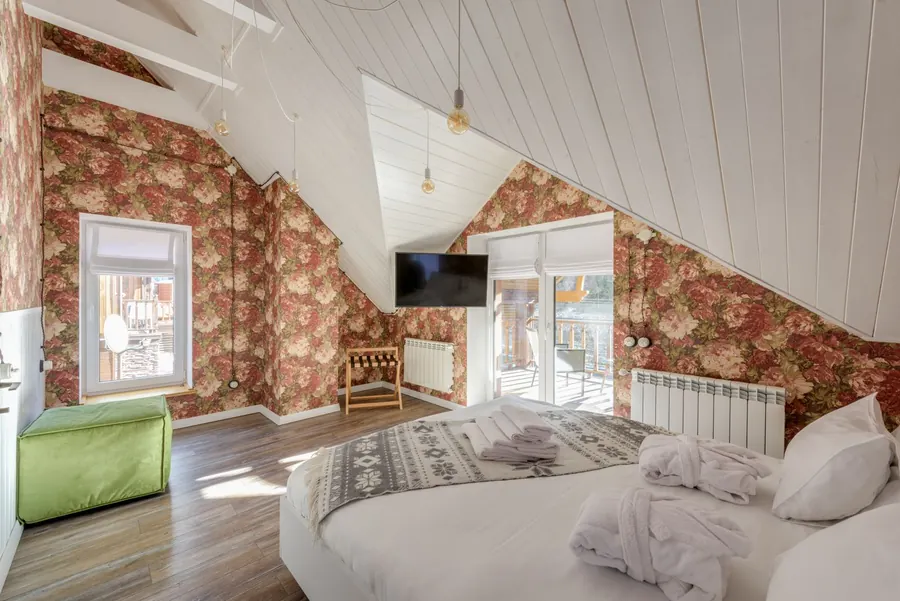
In a converted roof the insulation runs up the slope between the rafters, behind the plasterboard. Done properly there’s a vapour control layer on the warm side and either a ventilated gap above the insulation or a breathable membrane designed to work without one. Done badly, warm air from the bedroom gets through gaps around downlights, sockets and the edges of the boards, hits the cold side of the insulation and condenses inside the sloping ceiling where nobody can see it. The first sign is often a patch of mould in the corner where the slope meets the knee wall, or paint blistering on the dormer cheek.
The small left-over spaces behind the knee walls are the other weak spot. They’re still cold lofts, but now they’re tiny, cut off from the ridge and usually packed with storage boxes. If a conversion was signed off, Croydon Council’s building control service or a private approved inspector will have issued a completion certificate, and the drawings behind it show how the roof was meant to be ventilated. It’s worth comparing those with what was actually built.
Fans, tumble dryers and the loft hatch
Some of the wettest lofts we see in Croydon have perfectly good ventilation. They just have far too much moisture being fed in from below.
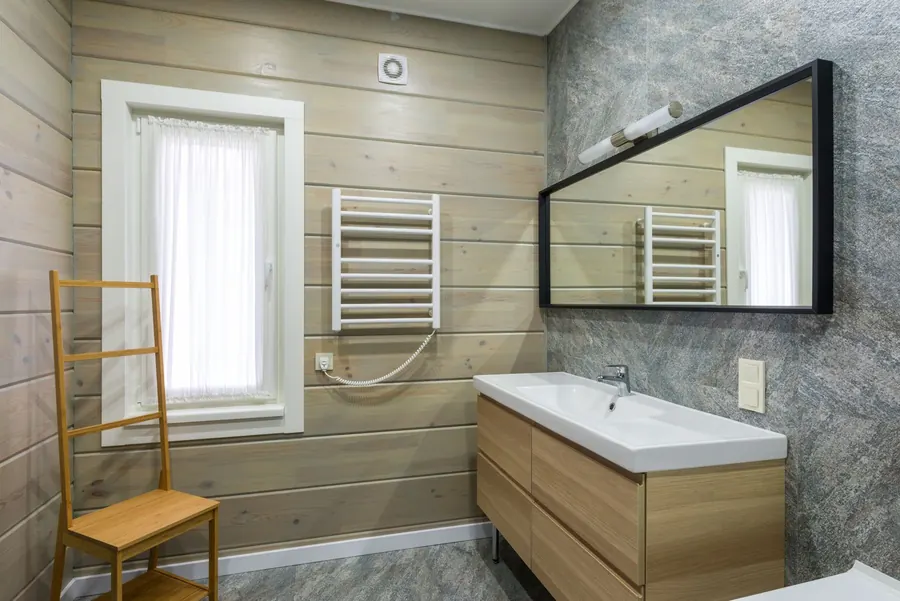
The worst offender is an extractor fan whose duct stops in the loft. It happens more than you’d think: a bathroom refit, a fan in the ceiling, a length of flexible duct laid across the joists and left open-ended. Every shower then blows steam straight into the roof void. Approved Document F of the Building Regulations expects extract from bathrooms and kitchens to go to the outside, not into a roof space. A duct that does reach the outside can still cause trouble if it isn’t insulated, because steam condenses inside the cold pipe and runs back down to the fan.
Other routes are less obvious:
- A loft hatch with no seal or draught strip around it
- Recessed ceiling downlights with no fire hood or cover over them
- Gaps around pipes, cables and the soil stack where they come up through the ceiling
- A tumble dryer vented through a hole into the eaves rather than out through a wall
Sealing these from below is cheap and often fixes half the problem before anyone goes onto the roof.
Condensation or a leak? How to tell the difference
Getting this right matters, because the cures are opposites. Patch a roof that’s suffering from condensation and you can make it tighter and wetter. Add vents to a roof that’s actually leaking and the water keeps coming in.

| What you notice | Points to condensation | Points to a leak |
|---|---|---|
| When it happens | Cold, clear, still mornings, even after days without rain | During or soon after rain, worst in wind-driven storms |
| Where it happens | Spread across a whole slope, often the north side | One spot or a line, usually below a chimney, valley, vent or abutment |
| What it looks like | Beads on nail tips and the underside of the felt, frost on the felt in a hard freeze | A run or trickle down a rafter with a clear tide mark |
| Staining | Black or grey mould spotting over a wide area | Brown stains with defined edges |
| Insulation | Damp across the top surface | Soaked in one patch |
A simple test helps. Go up into the loft with a torch on a cold, dry morning after a clear night, ideally when there’s been no rain for three or four days. If the felt is wet and the nail points are dripping, it’s condensation. If everything is dry then but wet again after the next storm, it’s a leak. Keep a short note of the dates and the weather each time you look, and a pattern usually appears within a fortnight. A cheap digital humidity meter left in the loft for a few days helps too.
Breathable membranes, roof vents and BS 5250
The British Standard that covers all of this is BS 5250:2021, the code of practice on managing moisture in buildings. It replaced the 2011 version and sets out how much air a cold loft needs at the eaves and the ridge. That figure depends on the type of underlay, whether the roof covering lets air through, and how well the ceiling underneath is sealed.
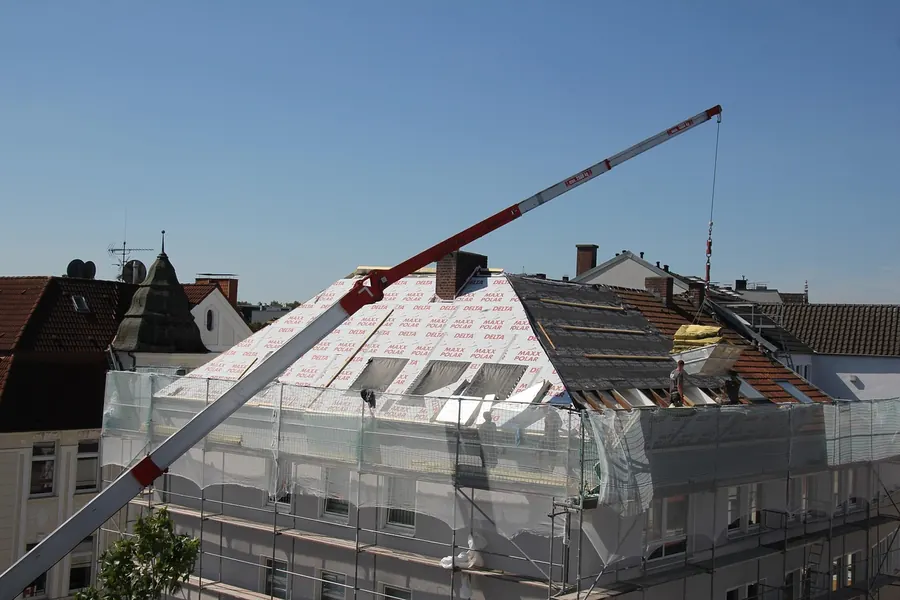
Underlays come in two broad kinds. High-resistance (HR) underlays, which include old bitumen felt, hardly let vapour through, so the loft has to be ventilated properly at the eaves, and on steep or wide roofs at high level too. Low-resistance (LR) underlays, the breathable membranes used on almost every re-roof now, let water vapour pass through to the batten space and away. They give a lot more margin. Under the 2021 standard, though, you can only lean on a membrane alone when the ceiling below is genuinely well sealed, and you have to assume the tiles are airtight unless the maker can show otherwise. Very few older Croydon houses have a sealed ceiling, so in practice most still need air moving through the loft.
Low down, air gets in through over-fascia vent strips or vented soffit boards, with plastic rafter trays holding the insulation back so it can’t smother the gap. Higher up, it gets out through vent tiles or vent slates swapped in for ordinary ones near the top of the slope, matched to whatever covering is already there. On a ridge that needs rebedding anyway, a ventilated dry ridge does the same job along the whole apex, and our article on dry ridge and dry verge goes through how one is fitted. For a 1960s or 1970s re-roof sitting on tired bitumen felt, though, vents are only a patch. The proper fix there is stripping it and relaying over a breathable membrane.
What fixing loft condensation costs in Croydon
These are typical guide prices for Croydon houses and will move with access, roof height and how much damage the damp has already done. A scaffold, if one is needed, is usually the biggest variable on its own.
- Sealing the loft hatch, covering downlights and filling service gaps: £100 to £300
- Re-routing a loose extractor duct to the outside through a vent tile or soffit: £150 to £400
- Pulling insulation back from the eaves and fitting rafter trays: £150 to £450 for a typical semi
- Over-fascia or soffit vents along both eaves: £300 to £900 if the fascias are sound, more if they need replacing
- Tile or slate vents: around £100 to £200 each fitted, and most roofs need several
- Ventilated dry ridge on a typical semi: £450 to £1,200
- Treating mould on the rafters and boards: £250 to £600
- Re-roofing with a breathable membrane: from around £6,500 on a postwar concrete tile semi
Faults inside a converted roof are harder to price without opening something up. A local repair around a dormer cheek may come to a few hundred pounds, while stripping and rebuilding a whole sloping ceiling runs into thousands.
The cheapest jobs on that list are usually the ones to do first. Stop the moisture getting in, then give what’s left a way out, and on most Croydon houses the loft dries out within a winter. If you’d like someone to look at the felt, the eaves and the fan ducts and tell you which problem you’ve actually got, book a free loft and roof inspection in Croydon.
Frequently asked questions
Is a bit of condensation in the loft normal in winter?
A light mist on the underside of the felt after a frosty night, gone by lunchtime, is common and does little harm. It becomes a problem when it is there most mornings, when it drips, when the insulation feels damp, or when black spotting starts to appear on the rafters and the backs of the boards. That pattern means more moisture is getting into the loft than the ventilation can carry away.
Will a breathable membrane stop loft condensation on its own?
Not always. A vapour-permeable membrane lets moisture escape far more easily than old bitumen felt, but BS 5250 still expects most cold lofts to have air moving through them unless the ceiling below is properly sealed. On a typical Croydon house with an open loft hatch, downlights and pipe holes, the ceiling is not sealed, so eaves ventilation is still worth having even under a new membrane.
Do I need building control approval to fix loft ventilation in Croydon?
Fitting tile or slate vents, clearing blocked eaves and re-routing a fan duct to the outside are not normally notifiable on their own. Re-roofing more than about a quarter of the roof usually is, and so is any loft conversion. If the condensation is in a converted loft, the original building control completion certificate is the first document to find.
Can loft condensation damage the roof itself?
Yes, given time. Wet insulation loses much of its value, mould grows on the timber, and years of damp soften battens and rust the nails that hold the slates or tiles. On older Croydon roofs where the nails are already near the end of their life, persistent condensation can bring forward the day the roof needs stripping.
Free roof survey and a fixed written quote
Anywhere in Croydon and the surrounding CR postcodes. No call-out fee.