
14 October 2026
Roofers In Thornton Heath, Norbury And South Norwood: North Croydon Roofs, Costs And Council Rules
Hiring roofers in Thornton Heath, Norbury or South Norwood? What fails on north Croydon's terraces, semis and converted flats, 2026 prices, and which streets are conservation areas.
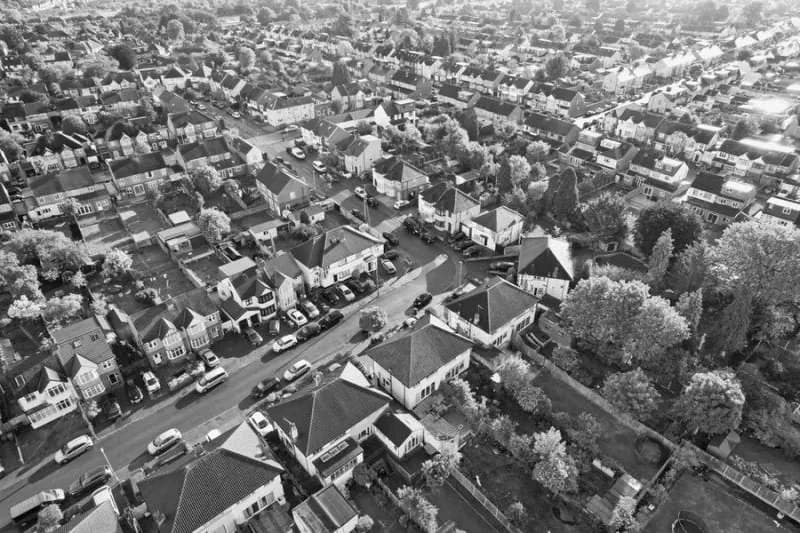
North Croydon is not a single place, as far as roofs go. Thornton Heath is a grid of long Victorian and Edwardian terraces on low, flat ground. Norbury mixes century-old terraces with a London County Council cottage estate and interwar semis climbing towards Pollards Hill. South Norwood grew up round a railway junction and a busy high street, and has houses that run up the slope to the Norwood ridge. If you are trying to find roofers in Thornton Heath, Norbury or South Norwood, the useful first question is which of those houses you live in. A large share of them are now split into two or three flats. And three of the borough’s conservation areas sit within a mile of each other here, so the planning answer changes from street to street. This guide sorts it out, and finishes with what the work tends to cost in 2026.
Why north Croydon roofs need a different survey
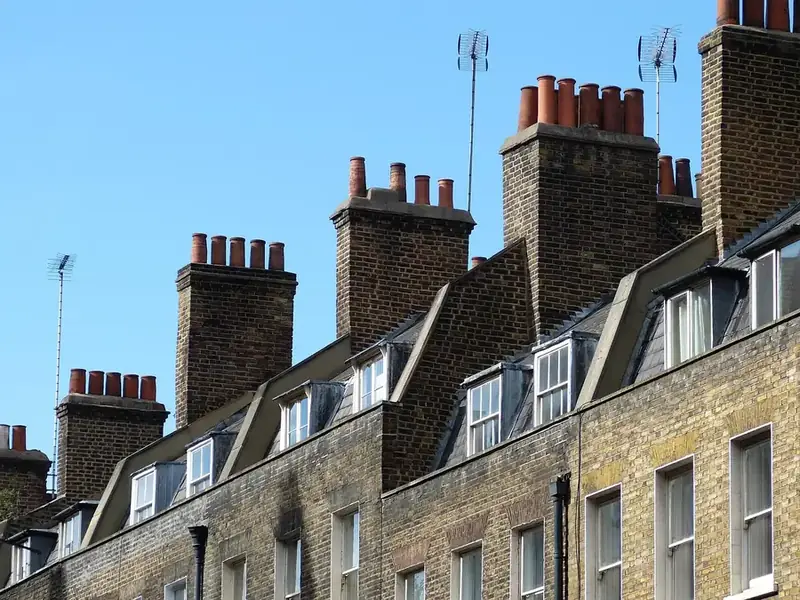
Most of the houses up here went up between about 1880 and 1939, in a fifty-year rush that followed the railways and then the trams along the London Road. Builders worked fast and cheap. You see it in shallow rear roofs, narrow downpipes, chimney stacks shared over every party wall, and back additions finished with whatever covering was in fashion that decade. So a fair survey on a CR7, SE25 or SW16 house checks three roofs, not one: the main slope, the roof over the rear addition, and the gutters and valleys where they meet.
That is how our roof repairs across Croydon are organised in this part of the borough. The leak you can see indoors is often a few metres from the place where water gets in, and on a terrace it may not even be on your roof. If a roofer quotes from the pavement without going up the back, you are paying for a guess.
Thornton Heath and South Norwood terraces: slate fronts, tired backs
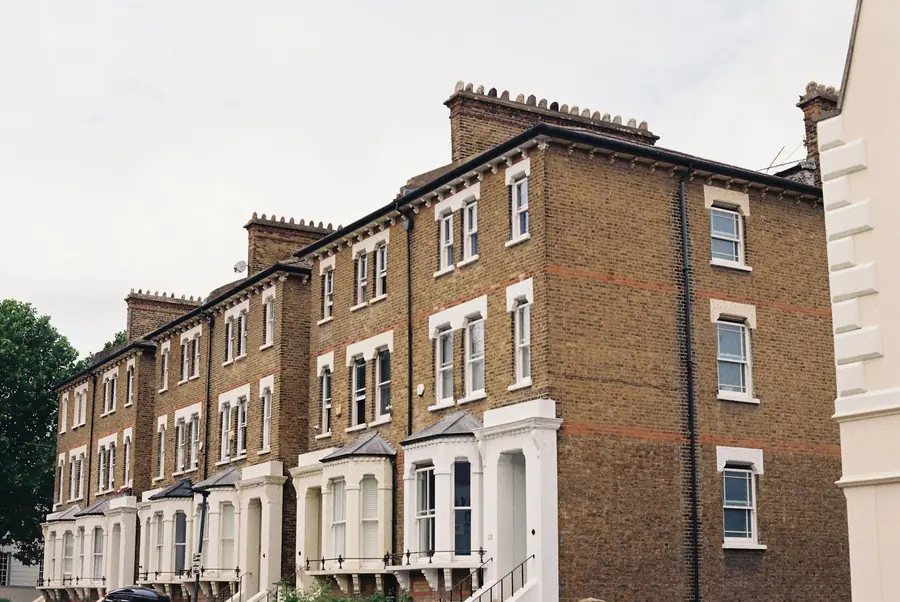
Walk down almost any road off Brigstock Road, Parchmore Road, Portland Road or Albert Road and the pattern is the same. Two-storey terraces in yellow London stock or red brick. Welsh or imported slate on the main pitch. A party wall that comes up through the roof as a small parapet or a shared stack. And at the back, a narrow two-storey wing with its own lower roof, plus a single-storey kitchen roof that has usually been reworked several times.
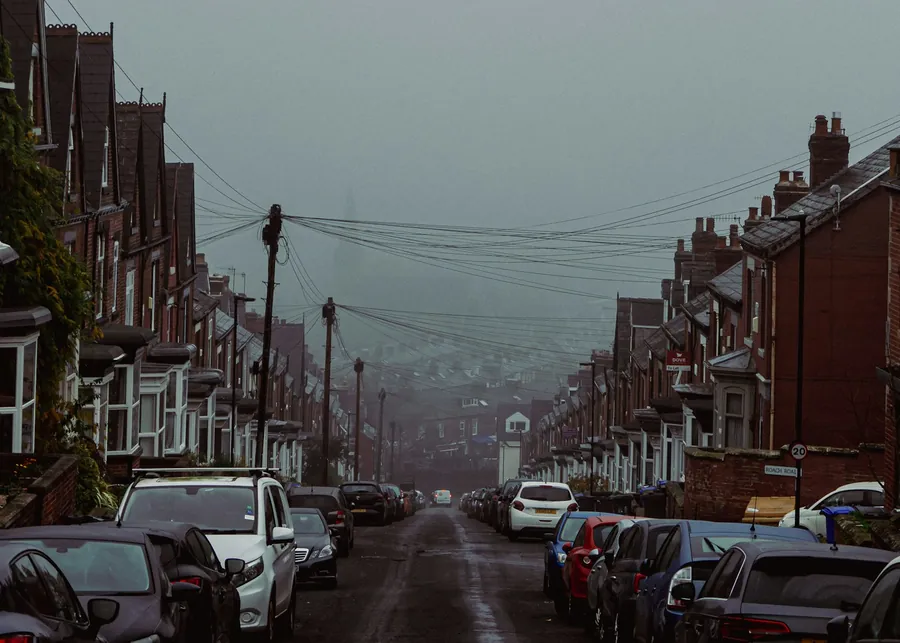
On these houses slate rarely breaks on its own. What goes is the iron nail holding it, and after a hundred-odd winters plenty of those have rusted through. One slate slides down, then another, and the felt under it (if there is any) gets wet. Front slopes like that can usually be refixed with copper or lead tingles for a few more years. The rear is the bigger worry. Water off two main slopes, the back wing and next door all funnels into one valley or one small hopper, and on ground as low as Thornton Heath a heavy shower fills it fast. In South Norwood, more of the houses sit on a slope, so the back gutters on the uphill side catch silt and leaves washed down from the neighbours above.
Norbury: the cottage estate, Edwardian gables and interwar semis
Norbury has the most varied roofs of the three. Between roughly 1906 and 1921 the London County Council built the Norbury Estate, one of its first cottage estates, to look more like a village than a London street, with steep pitches, gabled ends, tall stacks and a good deal of clay tile. The estate has been a Croydon conservation area since 2008. Around it, private builders put up gabled Edwardian semis and short terraces, mostly in red brick with clay plain tile or slate. Then, after the First World War, interwar semis with hipped roofs spread up towards Pollards Hill and Norbury Park.
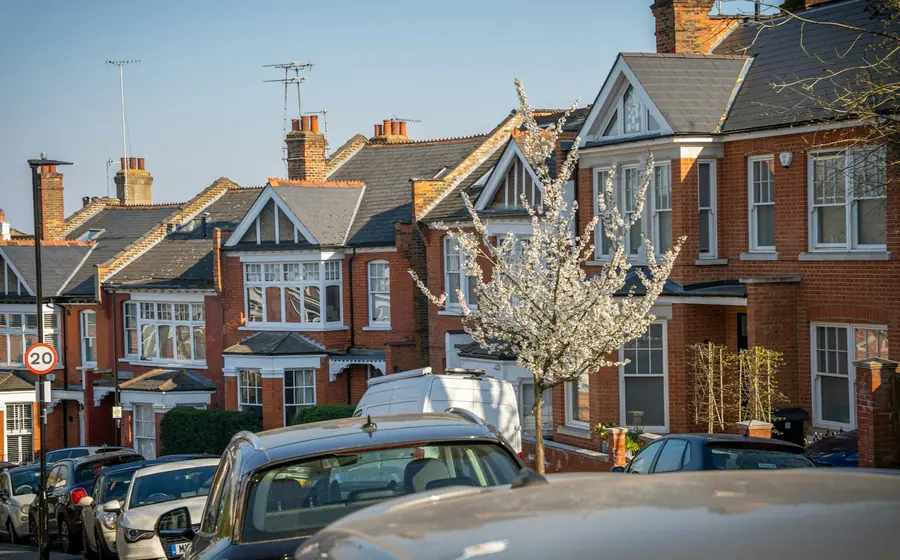
Each type wears out in its own way. On the cottage estate, the clay tiles are often the originals and failing at the nibs, and the swept details where roofs meet are slow, careful work to repair. The Edwardian gables lose their verge mortar first, and the decorative tile hanging on the bays lets water into the timber behind. On the interwar semis, the first re-roof was often in heavy concrete interlocking tiles laid in the 1970s or 80s, and the hips and ridge bedded in mortar are now cracking. If you own one of those, the question is usually whether to dry-fix the ridge and hips and carry on, or accept that the whole covering is nearing the end.
The Norwood ridge: higher streets, harder weather
Not all of north Croydon sits low. Climb from South Norwood or Norbury towards Beulah Hill and Upper Norwood and you reach some of the highest ground in London, a ridge of London Clay topped by the Crystal Palace transmitter. Houses up there get the full force of a south-westerly with nothing between them and the North Downs. Down in Thornton Heath you might lose one slate in a gale. On an exposed corner near the top of Beulah Hill the same storm can strip a row of ridge tiles and lift the lead off a stack.
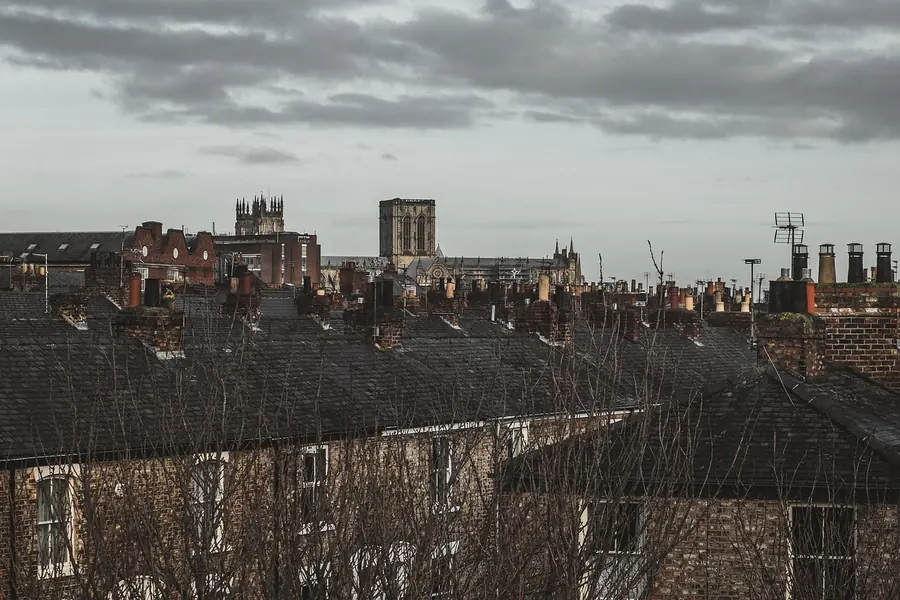
The clay matters too. London Clay shrinks in dry summers and swells again in wet winters, and a house on a slope moves more than one on the flat. That shows up on roofs as cracked mortar fillets against walls, small gaps opening at abutments, and ridges that have dipped slightly over decades. Nothing there to panic about. It does mean any roofer quoting here should look at the flashings and fillets as carefully as the tiles, since a new covering laid against a gap that keeps opening will leak at the edge within a few winters.
Houses split into flats: who to call and how the job runs
A lot of the bigger terraces and semis in all three areas are now two or three flats. That changes how a roof job runs before anyone climbs a ladder. The person with the wet ceiling is usually in the top flat, but the roof is normally part of the shared structure, so the freeholder or the residents’ company commissions the work and the cost is split through the service charge. We went through how leases decide that in our guide to roof repairs in Croydon converted flats.
Then there are the logistics. Scaffold on a converted house often needs the ground-floor flat’s garden or side passage. Old felt and tiles may have to come out through a communal hallway. And if any one leaseholder’s share is going to pass £250, the freeholder has to consult everyone first. The steps are set out in the GOV.UK guidance on leasehold service charges and consultation. That takes weeks, so ask for a temporary repair to stop the water while the formal process runs. A sheet over a split back roof or a slate slid back into place costs little and buys time.
Croydon Council, conservation areas and the planning line
All three areas sit inside the London Borough of Croydon, even where the postcode suggests Lambeth or Bromley. Like-for-like repairs need no consent anywhere. The line falls when you change what the roof looks like, and here that depends on exactly which side of a boundary your house is on. The Croydon conservation areas directory has the map for each. Locally, the ones to know are the Norbury Estate and Norwood Grove (both 2008), South Norwood (1992, redrawn in 2022), Beulah Hill (2008), and Upper Norwood Triangle (1989) on the ridge.
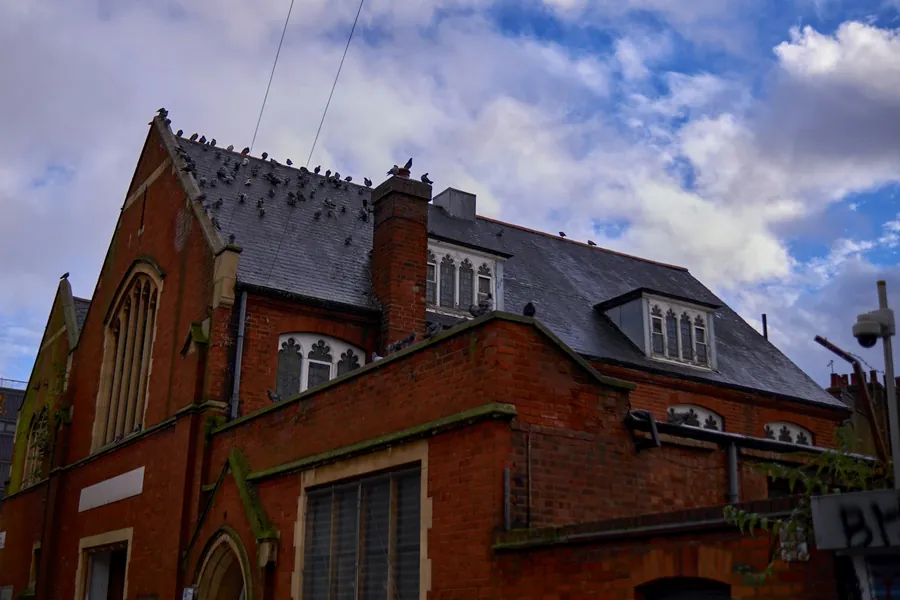
South Norwood is the one most people miss. It is centred on the High Street, Station Road and the clock tower, takes in only some of the residential roads around them, and it is on Historic England’s Heritage at Risk register. Croydon’s South Norwood conservation area appraisal and management plan sets out what the council wants kept, and original slate roofs and chimney stacks fall in that category. If you own a shop with a flat above inside the boundary, talk to the council before you replace slate with something cheaper. Thornton Heath has no conservation area at all. There, the main trap is the converted house. Flats have no permitted development rights, so a dormer or a rooflight that a house owner could add freely needs full planning permission on a building divided into flats.
What roof work costs in Thornton Heath, Norbury and South Norwood
These are rough 2026 figures for jobs we see often in this corner of the borough. They include VAT, and where scaffold is normally needed it is in the price. Mid-terrace houses with no side access sit at the higher end, because every bag of waste goes out through the house.
- Refixing three or four slipped slates on a terrace front slope: £200 to £400
- Clearing and resealing a blocked rear hopper or shared valley outlet: £150 to £350
- Relining a lead valley shared between two terraced houses: £900 to £2,000, often split with next door
- New covering over a back-addition flat roof, six to ten square metres: £1,800 to £3,500
- Repointing and reflashing a shared chimney stack, scaffold included: £900 to £2,200
- Dry-fixing the ridge and hips on an interwar hipped semi: £700 to £1,500
- Re-slating a two-storey terrace main roof in imported natural slate: £11,000 to £16,000
- Re-roofing a Norbury Edwardian semi in clay plain tiles: £15,000 to £24,000
Three things push prices up locally more than anything else: a conservation officer asking for matching natural slate or handmade tiles, a highway licence for scaffold on a busy road such as the London Road or Brigstock Road, and a deck under the back roof that has gone soft. Ask for each of those to be priced as a separate line. Then you can compare quotes properly and see which roofer has actually been up to look.
Book a free roof survey in Thornton Heath, Norbury or South Norwood
Frequently asked questions
Is South Norwood a conservation area?
Part of it. Croydon designated the South Norwood conservation area in 1992, extended it in 2007 and redrew it again in 2022, when a new appraisal and management plan was adopted. It centres on the High Street, Station Road and the streets around the clock tower and Norwood Junction rather than the whole of SE25, so check the council's map for your address. If you are inside the line, swapping natural slate for concrete tiles or adding rooflights on a slope facing the road is worth discussing with the council first.
Are there conservation areas in Thornton Heath?
Not in Thornton Heath itself. The nearest are the Norbury Estate and Norwood Grove to the west and South Norwood to the east. That means most Thornton Heath roof work, including changing the covering on a house, falls under ordinary permitted development rules. Flats are different: a converted house has no permitted development rights for roof alterations, so dormers and rooflights on a flat building need a planning application.
Who arranges roof repairs on a house split into flats in north Croydon?
Usually the freeholder or a residents' management company, because most leases keep the roof as part of the shared structure. If a single leaseholder would be charged more than £250, the freeholder has to run a formal consultation before the work starts. A roofer can still inspect and make a leak safe for any one flat owner, and a written report of where the fault sits makes the conversation with everyone else much quicker.
How much does it cost to replace the flat roof over a back addition in Thornton Heath?
For a typical rear addition of six to ten square metres, stripping the old layers and laying a new rubber or fibreglass covering with proper upstands usually costs £1,800 to £3,500 including VAT. Rotten decking, a shared gutter with next door, or having to carry everything through a mid-terrace hallway pushes it towards the top of that range.
Free roof survey and a fixed written quote
Anywhere in Croydon and the surrounding CR postcodes. No call-out fee.